 EN
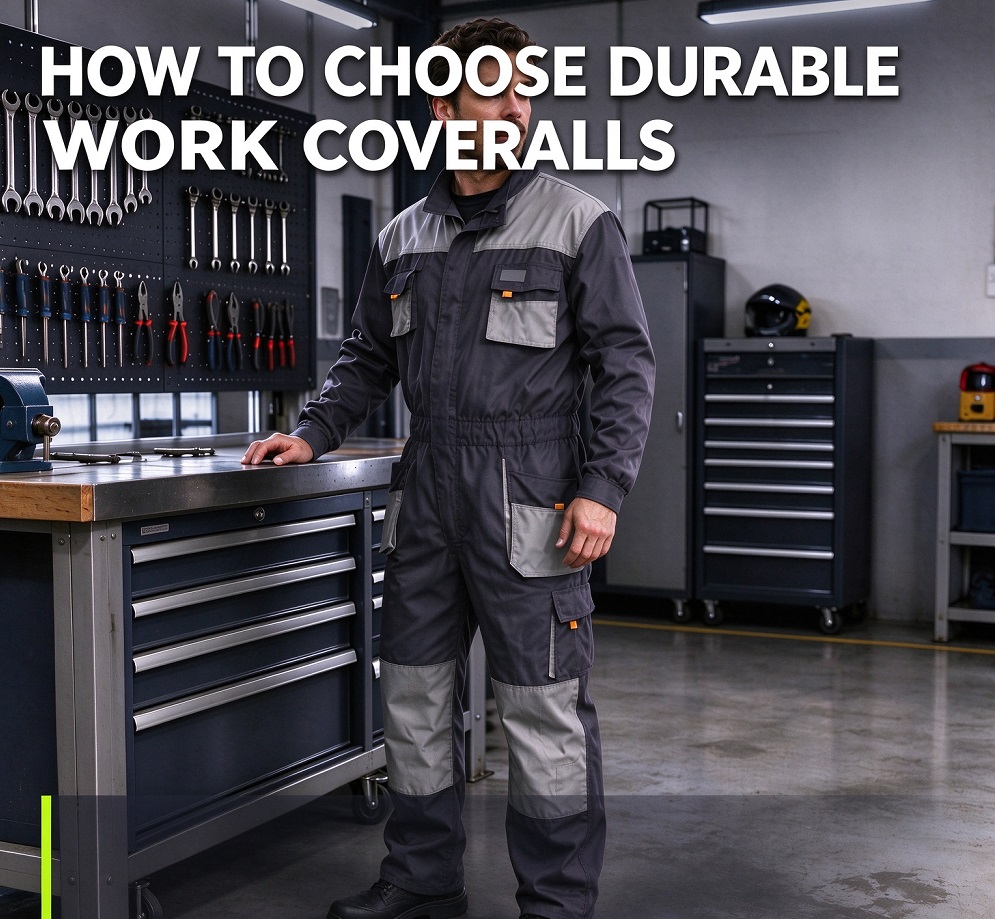
For construction crews, mechanics, mining workers and factory operators, work coveralls are far more than simple workwear. A well‑made one‑piece coverall protects workers against dirt, sharp debris, chemical splashes and potential thermal risks, while supporting full freedom of movement for long‑shift jobs. Poor‑quality work overalls tear easily, fade after few washes or fail safety compliance — bringing hidden risks to your workforce and your business.
Whether you are a procurement manager sourcing uniforms for in‑house staff, a distributor building your private‑label product line, or an importer ordering bulk protective workwear for resale, knowing how to evaluate work coveralls helps you avoid costly mistakes. This blog breaks down the most critical buying considerations, from fabric selection and safety certifications to OEM customization and factory quality control.
Key Factors When Sourcing Industrial Work Coveralls
1. Pick the Right Fabric for Your Working Environment
Fabric defines durability, comfort and functional performance of work coveralls. Different industrial scenarios require different textile options.
- Poly‑cotton blend: The most popular all‑round choice. Balances tear‑resistance, breathability and cost‑efficiency. Great for general construction, workshop maintenance and warehouse operations. It resists frequent washing without fast fading.
- 100% cotton: Soft and heat‑resistant, suitable for high‑temperature working sites. Note that pure cotton has lower anti‑tear performance compared with poly‑cotton material.
- Rip‑stop fabric: Reinforced grid structure against rips and snags. Perfect for mining, heavy machinery and outdoor construction where sharp objects are common.
- Functional treated fabrics: Choose flame‑retardant or anti‑static fabrics for oil‑gas, petrochemical and welding environments. Look for products tested to EN 11612 for heat and flame protection.
Always confirm fabric GSM (gram per square meter) with your supplier. For heavy‑duty industrial use, fabric weight normally ranges from 240 GSM to 320 GSM. Too‑light fabric will not hold up under daily heavy‑site wear.
2. Verify Safety Certifications for Your Target Market
If you sell or use coveralls within the European Economic Area, compliance documentation cannot be skipped. General‑purpose workwear needs basic textile safety certification such as OEKO‑TEX, which confirms textiles are free of harmful substances.
For protective PPE‑rated coveralls:
- EN ISO 11612: Standard for heat and flame protective clothing
- EN ISO 20471: Standard for high‑visibility hi‑vis work coveralls
- EN 13688: General performance requirements for protective clothing
When CE marking is claimed for PPE products, ask your manufacturer for the Notified Body reference number. Never trust only logo images on product pages — you need verifiable certificates for customs clearance and local regulatory checks.
3. Prioritize Practical Construction & Ergonomic Design
Great industrial coveralls combine robust build with worker‑centered design:
- Reinforced stitching: Double‑stitched seams on high‑stress areas: shoulders, crotch, knees and elbow joints. These positions receive constant pulling and friction during bending, climbing and kneeling work.
- Multi‑purpose tool pockets: Cargo pockets, pen slots and mobile‑phone pockets let workers carry measuring tapes, hand tools and small gear without extra bags.
- Comfort‑oriented cut: Baggy but not oversized cut allows full‑range body movement. Elastic waist design improves fit for different body shapes.
- Adjustable cuffs & collars: Prevent dust and debris getting inside sleeves during field work.
Avoid overly‑fashion‑oriented coverall styles. For industrial applications, function always comes first.
4. OEM & Customization Capabilities
Most B2B buyers require custom work coveralls for brand building: company logos, private labels, unique corporate colors or modified pocket layouts.
A reliable workwear manufacturer should support these custom options:
- Logo application: embroidery, screen printing, heat transfer or sublimation printing
- Custom woven labels, care labels and hang‑tags for private‑label projects
- Custom color matching according to Pantone references
- Size‑grading adjustment for EU, US or Asian sizing standards
- Adding extra functional features: knee‑pad pockets, radio loops or hi‑vis reflective tapes
Important note: Distinguish stock‑item MOQ versus production‑run MOQ. Custom‑dyed, custom‑spec coveralls require setup for fabric dyeing, pattern grading and production‑line configuration. A typical run‑MOQ of 3000 pieces per style per color is normal for genuine OEM manufacturing.
5. Inspect the Manufacturer’s Quality‑Control Workflow
Many buyers face this frustrating problem: samples look perfect, but bulk goods show inconsistent fabric weight, colour deviation or loose stitching. This issue roots in incomplete factory QC processes.
Before placing bulk orders, ask your potential supplier these questions:
- Do you perform incoming inspection for fabric weight, colour fastness and defects?
- Is there in‑line inspection during sewing production?
- What is final inspection standard: AQL sampling or 100% full visual & functional inspection?
- Can you provide pre‑production (PP) samples for written approval before mass‑production starts?
Trusted factories welcome third‑party pre‑shipment inspection and can share independent audit reports, for example TÜV Rheinland or Bureau Veritas audit documents.
Common Applications for Industrial Work Coveralls
High‑quality work coveralls serve a wide scope of industries:
- Construction & building sites
- Auto‑repair garages & mechanic workshops
- Mining, oil‑field and petrochemical operations
- Factory assembly lines and warehouse logistics
- Road maintenance & public infrastructure projects
- Agriculture, forestry and heavy‑duty field work
Frequently Asked Questions About Work Coveralls
Q: What fabric GSM should I choose for construction‑site coveralls? A: For regular construction use, 260‑300 GSM poly‑cotton fabric delivers balanced durability and breathability. Heavy‑abrasion sites can select 300‑320 GSM material.
Q: Can I order custom‑logo coveralls with small quantity? A: Custom production MOQ is normally 3000 pieces per style per colour. We offer sample pieces for quality evaluation, but small‑batch custom production will result in much higher unit price due to production‑line setup costs.
Q: How long is typical lead‑time for custom work coverall orders? A: Standard production cycle is 60 days after written approval of pre‑production sample. Complex functional fabrics may extend lead‑time. Always confirm the starting point of lead‑time in written quotations.
Q: What certificates do I need for exporting protective coveralls to EU markets? A: OEKO‑TEX for textile safety. For PPE‑classified coveralls, valid CE certification under EU PPE Regulation (EU) 2016/425 with authorized Notified Body information, plus corresponding EN test reports.
Choosing suitable work coveralls is not only about comparing unit prices. The right one‑piece work uniform protects worker safety, complies with import regulations and represents your brand image. Always evaluate fabric performance, safety certifications, factory QC capability and real OEM capacity before confirming large‑volume orders.