 EN
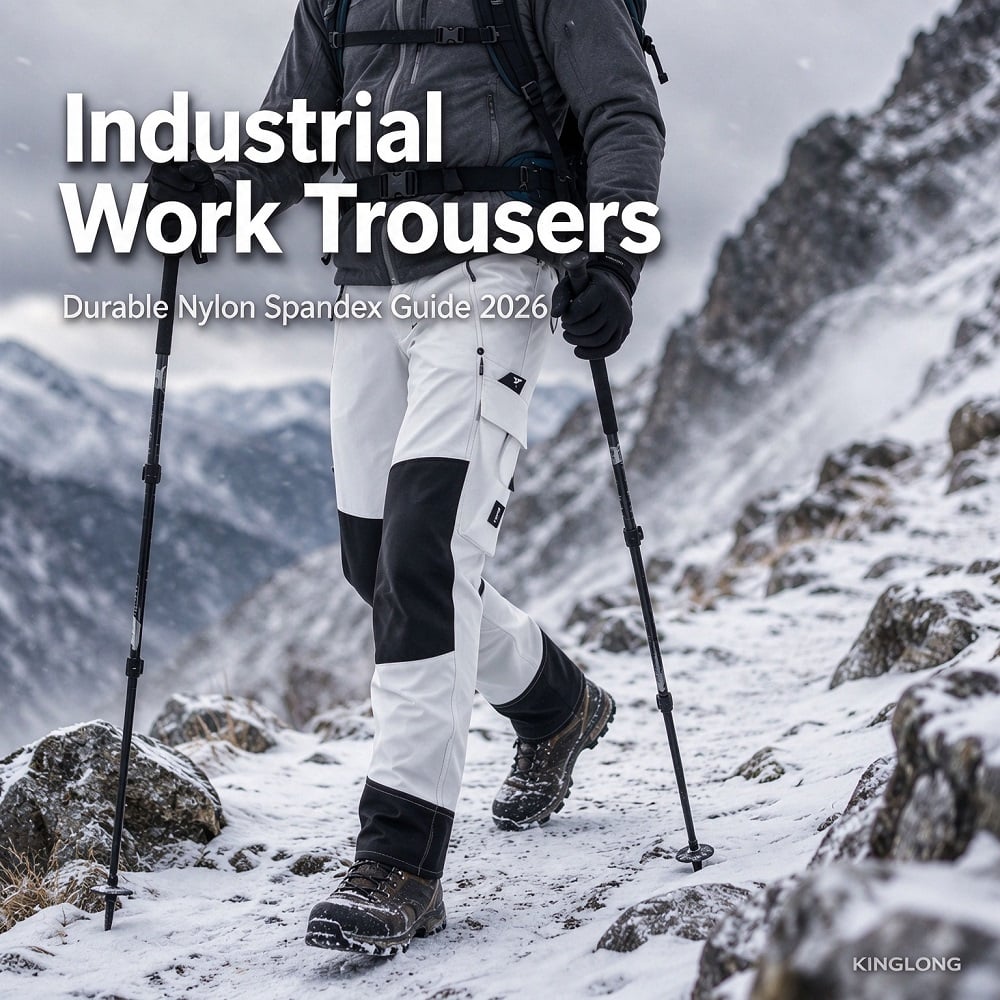
Across construction, field maintenance, and warehouse operations, industrial work trousers are among the most frequently replaced uniform items, and quality inconsistencies are a leading cause of unplanned uniform spend. Many bulk orders of work trousers arrive with clean stitching and consistent sizing on initial inspection, but fail prematurely in the field due to untested fabric performance, weak structural reinforcements, or inconsistent build quality. For reinforced industrial work trousers and nylon spandex work trousers in particular, long-term durability and functional reliability depend on measurable material and construction standards, not surface-level marketing claims. This guide outlines the key testing metrics, reinforcement verification points, and step-by-step bulk acceptance checklist to help buyers qualify work trousers accurately before full shipment acceptance.
Core Performance Testing Metrics for Industrial Work Trousers
Field performance of work trousers can be predicted accurately through standardized lab tests. Four core metrics separate long-lasting industrial work trousers from disposable fast-fashion workwear, and each aligns with common failure modes seen in real industrial roles.
Tear strength measures how much force is required to rip the fabric of work trousers, and is one of the most reliable predictors of field lifespan for industrial roles. Tested via the Elmendorf tear method, quality industrial work trousers should deliver a minimum tear resistance of 25N in both warp and weft directions for general use, and 35N or higher for heavy construction and fabrication roles. For construction and steel fabrication roles, where work trousers face daily contact with sharp metal and rough concrete, aim for the upper end of the tear strength range. For warehouse and light assembly roles, general-purpose grades deliver sufficient durability at a lower cost point. Work trousers with below-threshold tear strength will snag and rip on metal edges, scaffolding, and rough building materials, even when the fabric feels thick to the touch.
Abrasion resistance determines how well work trousers hold up to repeated rubbing against concrete, equipment frames, and pallet edges. Tested with a Martindale abrasion tester, general-purpose industrial work trousers should withstand 15,000 cycles before visible fabric wear, while heavy-duty reinforced work trousers should reach 30,000 cycles or more. This metric directly correlates to how quickly knee and seat areas will thin and develop holes in daily use, making it critical for roles that involve frequent kneeling or crawling.
Seam strength is the single most common failure point for bulk work trousers orders. Even thick fabric will fail early if seams pull apart under stress. For industrial work trousers, main seams should withstand a minimum pull force of 120N without splitting. Bartack reinforcements at pocket corners and stress points should hold 80N or more. Seam failure is often hidden in sample products but becomes widespread in bulk production if stitching quality is inconsistent across the production run.
Stretch recovery is critical for nylon spandex work trousers, as poor recovery leads to bagging at the knees and waist over time. Quality stretch work trousers should retain 85% or more of their original dimensions after 50 stretch cycles, and show less than 3% growth after 10 industrial wash cycles. Work trousers with low stretch recovery will look loose and unprofessional within a few months of regular wear, even if they do not develop tears or abrasion damage.
Reinforced Work Trousers: How to Verify Real Reinforcement
Many suppliers market work trousers as reinforced, but reinforcement quality varies dramatically between products. Some add thin decorative fabric patches that do little to extend service life, while others integrate structural reinforcement into high-wear zones. Use these three checks to verify genuine reinforcement on industrial work trousers.
First, check knee reinforcement construction. True reinforced work trousers attach knee panels with double stitching around the full perimeter, not just straight top and bottom seams. The panel fabric should match or exceed the base fabric in tear and abrasion strength, rather than using a thinner decorative material. For roles that require regular kneeling, the panel should cover the full kneecap and upper shin area, not just a small central patch.
Second, inspect pocket and stress point bartacks. Every pocket opening, belt loop attachment, and crotch seam junction should have bartack reinforcement — a short, dense zigzag stitch that distributes pulling force. On quality work trousers, bartacks will be tightly stitched with no loose threads, and placed exactly at the point where stress concentrates. Missing or poorly placed bartacks are the top cause of pocket tearing on bulk work trouser orders.
Third, confirm seam stitching specification. Main seams on reinforced industrial work trousers should use double-stitch construction with two independent rows of stitching, not a single row with a decorative second line. Lockstitch construction is preferred over chain stitch for industrial work trousers, as it will not unravel if one thread breaks.
Common Quality Pitfalls for Nylon Spandex Work Trousers
Nylon spandex work trousers are popular for their balance of durability and mobility, but they have unique quality issues that are hard to spot in initial samples. Buyers often encounter these same pitfalls across repeat bulk orders.
The first pitfall is inconsistent elastane distribution. Some suppliers concentrate spandex only in the waistband or side panels, while marketing the product as full stretch. True nylon spandex work trousers have elastane woven evenly through both warp and weft yarns, delivering consistent stretch across the entire leg. Uneven stretch leads to twisting seams and uneven wear over time, and can cause discomfort for workers on long shifts.
The second pitfall is underweight fabric. Nylon spandex work trousers often quote a standard fabric weight in product specifications, but actual bulk production uses lighter material to cut costs. Lighter fabric may feel flexible initially, but has lower tear and abrasion resistance and wears out much faster. Always confirm fabric weight per square meter against sample specifications during bulk inspection.
The third pitfall is skipped pre-shrinking treatment. Nylon spandex blends that are not pre-shrunk before cutting will shrink 5% to 8% after the first industrial wash, causing work trousers to fit too tight and ride up at the ankles. Pre-shrunk work trousers will show less than 2% shrinkage after 5 washes, maintaining consistent fit across repeat orders.
Step-by-Step Bulk Acceptance Checklist for Work Trousers
Follow this structured checklist when accepting bulk shipments of industrial work trousers to catch quality issues before they enter your uniform inventory.
- Pre-production sample sign-off: Confirm all fabric specs, reinforcement details, sizing measurements, and branding on a signed pre-production sample before bulk manufacturing begins. Keep this sample as a reference for all later inspections.
- Mid-production random inspection: Pull 5 to 10 pairs from an early production batch and test key metrics against the signed sample. Check seam strength, fabric weight, and stretch recovery to catch deviations early before full production runs.
- Final shipment sampling: Inspect 10% of the total order quantity, selected randomly across multiple cartons. Check sizing consistency, stitching quality, reinforcement placement, and visible defects.
- Wash test validation: Run 3 to 5 pairs through 5 standard industrial wash cycles to verify shrinkage, color fastness, and stretch recovery. Reject the batch if results fall outside agreed thresholds.
- Documentation review: Request test reports for tear strength, abrasion resistance, and seam strength from the manufacturer, and cross-reference against your own sample test results.
Industrial work trousers are a high-volume, long-cycle purchase, and cutting corners on quality acceptance leads to higher replacement costs and worker dissatisfaction over time. By focusing on measurable testing standards, verifying genuine reinforcement, and following a structured bulk acceptance process, buyers can ensure that their work trousers deliver the expected durability and performance across the entire order.
Explore our range of test-verified reinforced industrial work trousers and nylon spandex work trousers for full specification sheets, or contact our team to arrange sample testing for your next bulk procurement.