 EN
The Outer Layer: What the Jacket Must Do
The outdoor work jacket is the system's shield, and its job description is short: block wind, shed light rain and snow, survive abrasion, and let internal moisture escape. A jacket that only blocks weather turns into a sauna; a jacket that only breathes soaks through in the first drizzle. The right outdoor work jacket balances the two with a membrane or tight weave that is both windproof and breathable, so heat generated during work leaves while weather stays outside. Every outdoor work jacket on the market should be judged against that balance first.
Durability is the second requirement. An outdoor work jacket rubs against scaffolding, tool belts, truck beds and concrete edges all day, so reinforced panels at the elbows and shoulders, heavy-duty zippers and double-stitched seams are not upgrades — they are the baseline. An outdoor work jacket that looks good in the catalog and shreds in week three costs more than any premium alternative.
Pockets deserve a mention because they are the most-used feature on any jobsite jacket. Hand-warmer pockets for cold mornings, secure zip pockets for phones and credentials, and interior slots for tools that must not fall out during a bend or a climb. A well-designed outdoor work jacket puts them where hands naturally reach, not where a designer thought they looked balanced. Pocket logic alone can make or break an outdoor work jacket on a real jobsite.
The Mid Layer: Where the Warmth Lives
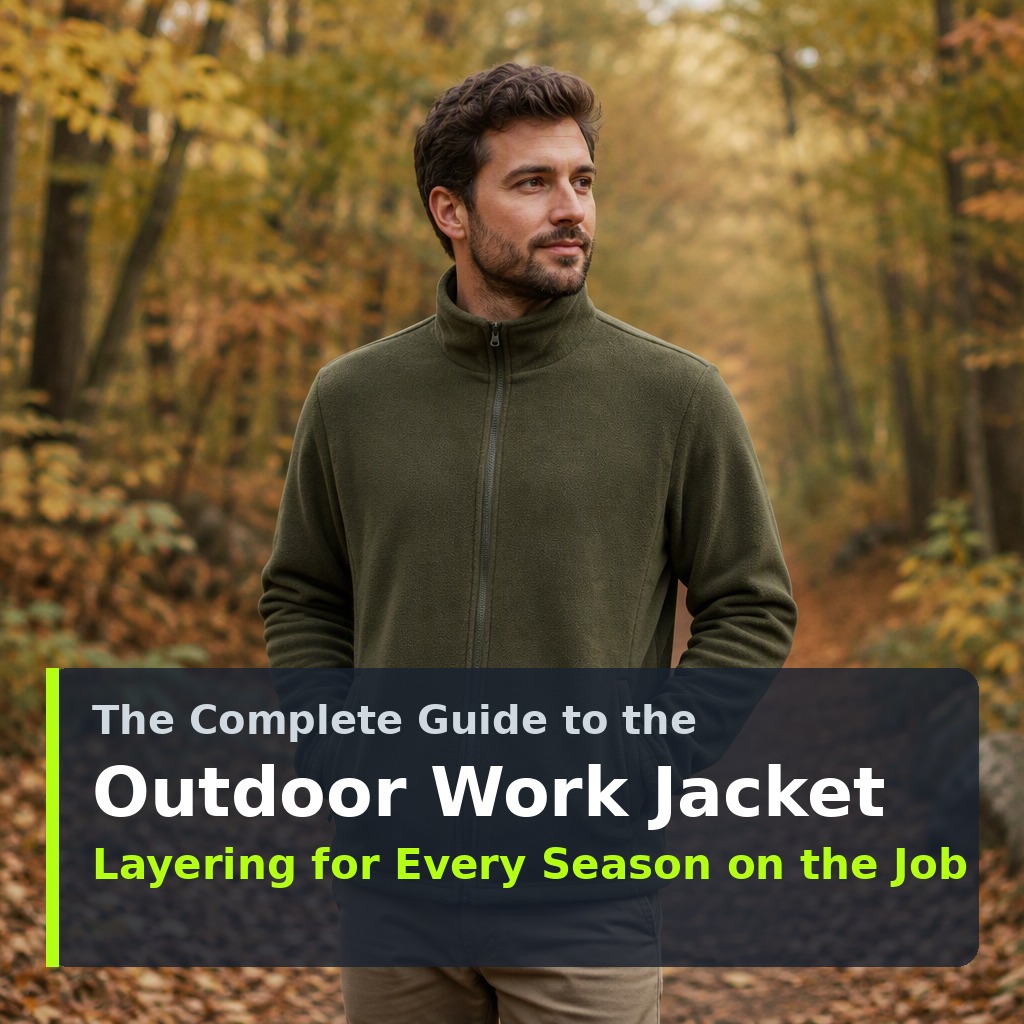
Beneath the shell, warmth comes from the mid layer — and this is where fleece changed everything. A polar fleece jacket traps heat in a structure that stays warm when damp, dries in minutes, weighs a fraction of what wool did, and moves with the body instead of fighting it. On dry, windless days a quality fleece can serve as the outer garment on its own; when weather arrives, the outdoor work jacket goes over it and the two work as one insulated unit. That pairing of fleece and outdoor work jacket is the workhorse combination of the entire season.
The layering math matters for procurement. A fleece plus an outdoor work jacket covers the same temperature range as a padded winter coat, but each piece stays useful alone. The fleece becomes the spring and autumn uniform; the shell works through summer showers. That is three seasons of value from two garments, and it is the core argument for buying the system rather than the single outdoor work jacket.
The Base Layer: The Forgotten Foundation
No discussion of an outdoor work jacket system is complete without the layer against the skin. Cotton is the enemy — it absorbs sweat and holds it, chilling the wearer the moment effort stops. A synthetic or merino base layer moves moisture outward to the fleece, which passes it to the shell, which vents it. The worker stays dry from the inside, and the insulation above keeps doing its job.
For teams specifying uniforms, this is also a training point. Workers issued an excellent outdoor work jacket over a cotton t-shirt will still report being cold, and they will blame the jacket. Educating crews on the full system protects both the workers and the supplier relationship — and it is the cheapest performance upgrade available for any outdoor work jacket program.
Matching the System to the Season
Autumn is the proving ground. Mornings near freezing, afternoons in the teens, rain that arrives sideways: the fleece-plus-shell pairing handles all of it, with the outdoor work jacket shedding the weather and the fleece managing the temperature swings. This is the season where a layering system earns its reputation, where a single heavy coat fails most visibly, and where the outdoor work jacket proves it deserves the top layer.
Winter raises the stakes. The same outdoor work jacket goes over a heavier fleece or an insulated liner, and the system competes with dedicated winter coats — often winning, because the layers of an outdoor work jacket system can be tuned through the day. Work hard, open the pit zips; stand still, close everything and add the liner. Static insulation cannot adapt like that.
Spring reverses autumn: the shell alone handles rain, the fleece alone handles dry cool days, and by early summer the outdoor work jacket has usually earned a rest — unless the site demands hi-vis shells or FR protection, in which case those requirements drive the outer layer choice and the layering logic underneath the outdoor work jacket stays exactly the same.
Safety Requirements Still Come First
A layering system never overrides compliance. Roadside and rail crews need certified hi-vis outer layers in the required class; electrical and energy work needs flame-resistant layers throughout the system, including the fleece. The outdoor work jacket market offers compliant versions of every layer, so the system approach and the certification approach are not competing ideas — they are the same purchase decision. Buying an outdoor work jacket that meets the site standard, then layering beneath it, satisfies both the safety officer and the foreman, and keeps the certified outdoor work jacket doing the job it was specified for.
What to Look For When Specifying?
When the time comes to order, evaluate any outdoor work jacket against a short list: certified protection matched to the site's risks; windproof, breathable and water-resistant fabric; reinforced wear zones; functional pocket layout; and sizing that accommodates the layers underneath — a worker in a fleece needs one size of ease in the outdoor work jacket, or the system binds at the shoulders and the benefit disappears. Ask suppliers for layering guidance rather than single-garment specs; manufacturers who understand systems will spec the combination, not just the jacket.
Then test the system, not the pieces. Have a couple of workers wear the full stack — base layer, fleece, outdoor work jacket — through a real week that includes rain, wind and a hard-labor day. Garments that pass that week pass anything, and the outdoor work jacket program is ready to scale.
An outdoor work jacket is not one garment but the command layer of a system: shell to block weather, fleece to hold warmth, base layer to manage moisture, all tunable through the working day and the seasons. Specified and worn as a system, an outdoor work jacket outfit outperforms any single winter coat in comfort, adaptability and cost per season served. For crews facing a long cold stretch of outdoor labor, there is no smarter uniform decision than building the wardrobe around a serious outdoor work jacket — and no worse one than buying the first padded coat on the first cold morning instead of the outdoor work jacket that would have carried the whole season.