 EN
What Is a Technical Fabric Reflective Softshell Jacket, and Who Needs One?
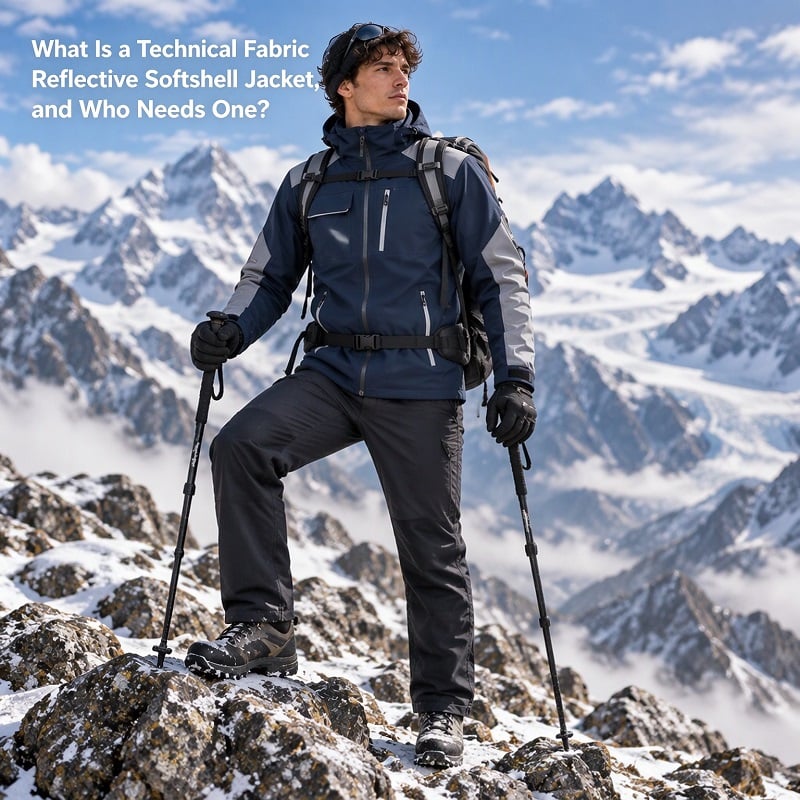
A technical fabric reflective softshell jacket is a stretch, wind-resistant outer layer with reflective trim for low-light visibility. It sits between a fleece and a waterproof hardshell: it moves with the body, blocks a light wind and sheds light rain, and it is not a certified rainwear or hi-vis garment. This guide breaks down what the fabric actually does, where the reflective detail should sit, how softshells compare with hardshells and fleeces, and what to check on a sample before you place a bulk order.
What the technical fabric in a reflective softshell jacket means?
On this garment the phrase usually describes a stretch woven face bonded to a soft back, either a light fleece or a mesh knit. The face resists abrasion and wind, the back holds a little warmth without a heavy fill, and the stretch is what lets the jacket follow a squat, a reach up a ladder and a stride on uneven ground.
Technical here is not a certification word. It describes the construction: a weave that stretches, a bond that holds layers together, and a finish that beads water. It does not carry a standard rating on its own. The numbers that matter are the water repellency treatment, the weight in g/m2, the stretch direction and whether the bond is a two-layer or three-layer build.
Where the reflective trim belongs
Reflective detail on this kind of jacket usually runs as piping along a chest zip, a seam line or a cuff. It catches a headlamp or a vehicle light at dusk, which matters for crews walking between vehicles, along a worksite edge or on a trail after dark.
Two things buyers should keep separate. First, reflective trim is not hi-vis certification. A reflective strip does not meet EN ISO 20471, which sets measured areas of reflective and fluorescent material on a certified garment. If a site or a tender requires certified hi-vis, that is a different build with a test report. Second, piping and printed reflective tape are not the same thing. Piping sits on a seam edge and survives washing longer; a print can scuff off against a pack strap. Ask which one the sample uses.
The reflective trim can be added to any of these, but on a softshell it follows the stretch without cracking, which is why the combination is common on utility and trail workwear.
When to choose a technical fabric reflective softshell jacket
It fits a crew or a retail range that works through variable weather: dry in the morning, wet and windy by afternoon, moving hard enough that a hardshell would trap heat. Think maintenance between sites, trail crews, field service, commuter delivery and hiking parties that start early.
It is the wrong choice for heavy, sustained rain; for work that requires a certified rainwear class; or for a site that mandates EN ISO 20471 hi-vis. In those cases order the classified construction, and do not describe a reflective softshell as meeting that standard.
Reflective trim and DWR both age in the wash
Three checks on the sample
- Stretch it in the job positions. Squat, reach overhead and bend forward. The seam should not pull at the armpit or the back, and the reflective piping should not kink when the fabric stretches.
- Wash it and look at the trim. Run five washes at the recipe your customer will actually use, then check whether the reflective strip still catches light and whether the DWR still beads water.
- Test the pockets with real load. Put a phone, a small tool and a glove in, then close the flaps and zips. A pocket that looks good on the flat layout fails once it carries weight.
How our side handles the order
Our technical fabric reflective softshell jackets sit in the outdoor garments and workwear ranges. Colour blocking, logo method and position, pocket layout and size chart are open to private label. Samples run 7 days after spec and colour confirmation, bulk 60 days after approval and deposit. We publish the fabric report that comes with the mill lot, and we do not print a reflective claim or a weather rating that the lot cannot back.
FAQ:
Is a reflective softshell jacket certified hi-vis? No. Reflective trim improves low-light visibility, but it does not meet EN ISO 20471, which requires measured material areas and a test report. Order a certified hi-vis garment where the site requires it.
Is the softshell waterproof? Usually water repellent rather than waterproof. It sheds light rain and wind; sustained downpour belongs to a hardshell. Ask for the test figure and the method before writing a waterproof claim on the listing.
What does technical fabric mean on the label? It describes a stretch or bonded construction chosen for movement and weather resistance, not a standard or a certificate. The useful details are the weight, the bond type, the stretch direction and the finish.
Can the colour and the logo change? Yes. Blocking, reflective location, logo method and hangtag are open, matched to an approved lab dip before cutting.