 EN
EN
Choosing the right work trousers suppliers is one of the most consequential procurement decisions a company can make when outfitting its workforce. Whether you manage a construction company, a manufacturing facility, a logistics operation, or a security firm, the quality and reliability of your workwear directly affects worker safety, brand image, and operational efficiency. A poor partnership with work trousers suppliers can lead to inconsistent sizing, substandard materials, missed delivery deadlines, and costly replacements that erode both your budget and your team's morale.
In today's competitive B2B environment, companies are expected to make smarter, more strategic procurement decisions. Partnering with work trousers suppliers is no longer simply a matter of price comparison. It involves evaluating manufacturing capabilities, compliance standards, customization potential, and long-term relationship scalability. This article walks through the critical considerations every business leader, procurement officer, or operations manager should evaluate before committing to a long-term workwear partnership.
Understanding Supplier Manufacturing Capabilities and Quality Standards
Assessing Production Capacity and Consistency
Before entering into any agreement, companies must evaluate whether their prospective work trousers suppliers have the production capacity to fulfill orders reliably and at scale. A supplier that can handle a small pilot order may not have the infrastructure to meet seasonal spikes or large contract volumes. Understanding the supplier's factory size, number of production lines, workforce capacity, and monthly output helps companies avoid future supply disruptions.
Consistency is equally important. High-performing work trousers suppliers maintain tight quality control processes across every production batch. This means that the 500th pair of trousers should meet the same dimensional accuracy, stitching quality, and material weight as the very first pair produced. Requesting samples from multiple production runs—not just a single showcase batch—is an effective way to verify this level of consistency before committing to a long-term contract.
Companies should also inquire whether the supplier uses standardized production protocols and whether they conduct in-line quality checks during manufacturing. Suppliers who invest in systematic quality assurance at every production stage are far more likely to deliver reliable, defect-free goods across extended supply relationships.
Material Sourcing and Fabric Performance Standards
The durability and function of work trousers depend heavily on the fabrics used in their construction. Reputable work trousers suppliers are transparent about their material sourcing, offering clear specifications for fabric weight, weave type, fiber blend, and treatment processes. For industrial environments, these details directly influence how long the garment will last under demanding physical conditions.
Companies operating in high-risk sectors—such as construction, electrical maintenance, or chemical handling—need to ensure that their work trousers suppliers offer fabrics that comply with relevant safety standards. This includes flame-resistant materials, anti-static properties, tear-resistant reinforcements in high-stress areas, and breathability features that maintain wearer comfort in hot or humid working conditions.
Asking for documented material test results or third-party lab certifications is a reasonable and necessary step. Trustworthy work trousers suppliers will have no hesitation in sharing these documents because it reflects positively on the quality of their offering. Suppliers who are evasive about material origins or performance specifications should be viewed with caution.
Evaluating Customization Capabilities and Brand Alignment
Custom Logo and Branding Integration
For many businesses, workwear is a direct extension of their brand identity. Uniformity in employee appearance reinforces professionalism and boosts company recognition—especially in public-facing roles. This is why the ability to integrate custom logos, embroidery, screen prints, or reflective branding elements is a top consideration when selecting work trousers suppliers.
Companies should ask potential suppliers about their in-house decoration capabilities versus outsourced decoration services. Suppliers who handle branding internally typically offer tighter quality control, faster turnaround, and lower costs. When decoration is outsourced, there is an added variable in lead times and a risk of inconsistency in how the brand elements are applied across large orders.
Well-established work trousers suppliers will also offer design consultation services, helping clients choose placement, color matching, and decoration methods that align with both the garment style and the brand guidelines. This collaborative capability signals a supplier who invests in building long-term client partnerships rather than simply fulfilling transactional orders.
Fit, Style, and Sector-Specific Design Options
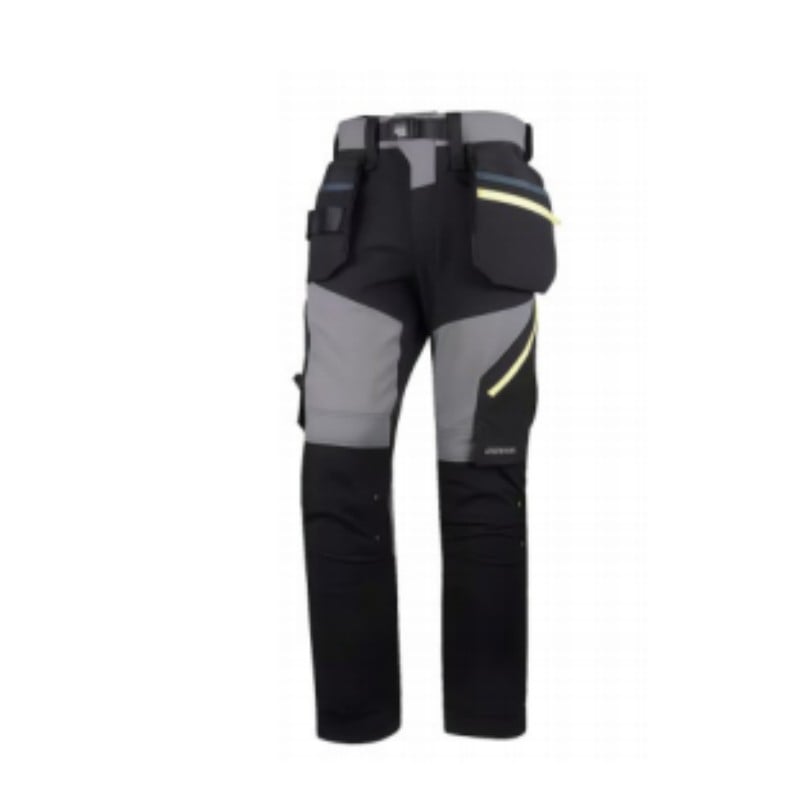
Different industries have different ergonomic and functional requirements for work trousers. A mechanic needs articulated knee panels and tool pockets. A construction worker benefits from reinforced cargo pockets, belt loops, and flexible waistbands. A security professional may require a more tailored silhouette that maintains a smart appearance while still allowing freedom of movement.
The best work trousers suppliers understand that a one-size-fits-all approach does not serve the diversity of industrial applications. They offer configurable designs, a broad size range, and the flexibility to accommodate custom modifications based on industry-specific requirements. When evaluating a supplier's catalog, companies should look beyond standard styles and assess whether the supplier can adapt designs to meet unique functional demands.
Gender-inclusive sizing, extended size ranges, and adjustable features such as elasticated waistbands or reinforced knee pockets are signs of a supplier who understands modern workforce diversity. Companies that prioritize inclusive workwear benefit from higher employee satisfaction and better overall adoption of uniform programs.
Compliance, Certifications, and Ethical Sourcing
Regulatory and Safety Compliance
Depending on the industries served and the regions where goods will be sold or used, work trousers suppliers must comply with a range of regulatory and safety standards. These may include ISO certifications, EN standards in Europe, OSHA-relevant specifications in the United States, or other region-specific occupational health and safety requirements. Before finalizing a procurement decision, companies need to confirm that their chosen supplier holds the relevant certifications for the target markets.
Certification documents should be current, verifiable, and issued by recognized third-party bodies. Suppliers who cannot provide up-to-date compliance documentation create legal and liability risks for the companies that purchase from them. In regulated industries, non-compliant workwear can result in penalties, project shutdowns, or insurance complications.
It is also wise to ask whether the supplier stays informed about evolving safety regulations and proactively updates their product lines to reflect new standards. Work trousers suppliers who adopt a forward-looking compliance posture reduce the risk of companies being caught off guard by regulatory changes that could affect their workwear programs.
Ethical Manufacturing and Social Responsibility
Corporate social responsibility has moved from a nice-to-have to a strategic business imperative. Companies are increasingly scrutinized by clients, investors, and regulators based on the ethical standards of their supply chains. Partnering with work trousers suppliers who maintain ethical manufacturing practices protects a company's reputation and aligns with broader ESG commitments.
When evaluating ethical practices, companies should ask about factory working conditions, fair labor standards, wage policies, and environmental management systems. Suppliers who participate in social compliance auditing programs or hold recognized certifications such as WRAP, SA8000, or SEDEX demonstrate a measurable commitment to responsible manufacturing.
Environmental sustainability is another growing criterion. Work trousers suppliers who use recycled materials, minimize production waste, or operate energy-efficient facilities represent a more future-ready supply partner. Companies that align their procurement with sustainability goals are better positioned to meet the expectations of sustainability-conscious stakeholders.
Logistics, Lead Times, and Supply Chain Reliability
Order Fulfillment and Delivery Performance
The practical reliability of a supply relationship depends heavily on how well work trousers suppliers manage logistics, lead times, and order fulfillment. Even the highest quality garments are of limited value if they arrive late, in the wrong quantities, or in poor packaging conditions. Companies should request detailed information about standard lead times, express production options, and delivery track records before entering a long-term agreement.
Suppliers with established freight partnerships and documented customs handling procedures provide a smoother import experience for international buyers. Understanding how a supplier manages shipping documentation, customs clearance, and freight insurance reduces the operational burden on the purchasing company and minimizes the risk of delivery complications.
It is also valuable to ask potential work trousers suppliers how they handle production delays or logistics disruptions. A supplier who has clear contingency protocols and communicates proactively during unexpected situations is far more reliable than one who only surfaces problems after they escalate. Communication quality during adversity is one of the truest tests of a supplier's professionalism.
Minimum Order Quantities and Scalability
Minimum order quantity requirements vary widely among work trousers suppliers. Smaller businesses or companies piloting a new uniform program may find high MOQ requirements prohibitive. Understanding a supplier's MOQ policies and whether they offer tiered pricing structures helps companies match their procurement approach to their operational and budgetary realities.
Scalability matters as much as entry-level accessibility. As a company grows, its workwear procurement volumes will likely increase. Partnering with work trousers suppliers who have demonstrated the capacity to scale operations—whether through larger production runs, multi-warehouse logistics, or faster turnaround on repeat orders—ensures the supply relationship remains viable as the company's needs evolve.
Some work trousers suppliers also offer inventory management services, including warehousing, split shipments, and drop-shipping capabilities that can simplify a company's internal logistics. These value-added services increase the strategic value of the supplier relationship and reduce the administrative overhead associated with managing large workwear programs.
Communication, Partnership Culture, and Long-Term Value
Responsiveness and Account Management Quality
The quality of communication between a company and its work trousers suppliers has a direct impact on how smoothly the procurement relationship functions. Suppliers who assign dedicated account managers, respond promptly to inquiries, provide proactive updates on orders, and offer clear escalation paths for issues create a significantly better partnership experience than those who provide only reactive, transactional support.
Before committing to a partnership, companies should test a supplier's responsiveness during the pre-sales phase. If a supplier is slow to answer technical questions, provides vague quotations, or struggles to accommodate basic customization inquiries during the courtship stage, these patterns are likely to persist—or worsen—once the contract is signed and orders are being placed.
Language capability, time zone coverage, and digital communication tools are also practical factors to consider when evaluating international work trousers suppliers. Suppliers who invest in multilingual support, real-time order tracking platforms, and digital sampling processes reduce friction throughout the relationship lifecycle.
Total Cost of Ownership Beyond Unit Price
Price is often the first metric companies evaluate when comparing work trousers suppliers, but it should not be the only one. The total cost of ownership encompasses far more than the per-unit garment price. It includes the cost of returns and replacements due to quality failures, the productivity impact of delayed deliveries, the administrative time spent managing supplier issues, and the reputational cost of poorly performing workwear.
Companies that focus exclusively on unit price often end up paying more in the long run. Investing in slightly higher-quality work trousers from a reliable supplier may extend garment lifecycle by 30 to 50 percent, dramatically reducing the total annual spend on workwear replacement. Durability, reliability, and service quality all have quantifiable economic value that must be factored into any procurement decision.
Long-term supply partnerships with trusted work trousers suppliers also tend to yield incremental benefits over time—better pricing from volume consistency, priority production scheduling, early access to new fabric technologies, and a deeper mutual understanding that results in faster, smoother order execution. These compounding advantages make relationship quality a true competitive asset.
FAQ
How many work trousers suppliers should a company evaluate before making a decision?
Most procurement professionals recommend shortlisting between three and five work trousers suppliers before making a final selection. This allows meaningful comparison across quality, pricing, customization, compliance, and service without creating an unmanageable evaluation workload. Requesting samples from each shortlisted supplier, conducting factory assessments where possible, and engaging in structured Q&A sessions with supplier representatives all contribute to a more confident and defensible final decision.
What certifications should work trousers suppliers hold for industrial use?
The certifications required from work trousers suppliers depend on the end-use industry and the markets where the garments will be deployed. Common standards include ISO 9001 for quality management, EN ISO 20471 for high-visibility garments, EN 11612 or NFPA 2112 for flame-resistant workwear, and various OSHA-aligned specifications for general occupational use. Social compliance certifications such as SA8000 or SEDEX membership are increasingly expected by companies with formal ESG commitments.
Is it advisable to work with a single work trousers supplier or maintain multiple sources?
Both approaches carry trade-offs. A single-supplier strategy simplifies coordination, often yields better pricing through volume consolidation, and allows for deeper partnership development. However, it also creates supply concentration risk. Many companies adopt a primary-secondary supplier model, where one work trousers supplier handles the majority of volume while a backup supplier is qualified and maintained to mitigate disruption risk during peak demand periods or supply chain disruptions.
How can companies verify the quality claims made by work trousers suppliers?
The most effective verification methods include requesting third-party lab test reports for fabric performance, conducting factory audits either directly or through an independent inspection agency, ordering pre-production samples across multiple size specifications, and checking references from other clients who have worked with the supplier over an extended period. For international work trousers suppliers, engaging a third-party quality control firm to conduct pre-shipment inspections on bulk orders adds an additional safeguard before goods are shipped.
Table of Contents
- Understanding Supplier Manufacturing Capabilities and Quality Standards
- Evaluating Customization Capabilities and Brand Alignment
- Compliance, Certifications, and Ethical Sourcing
- Logistics, Lead Times, and Supply Chain Reliability
- Communication, Partnership Culture, and Long-Term Value
-
FAQ
- How many work trousers suppliers should a company evaluate before making a decision?
- What certifications should work trousers suppliers hold for industrial use?
- Is it advisable to work with a single work trousers supplier or maintain multiple sources?
- How can companies verify the quality claims made by work trousers suppliers?