 EN
EN
Choosing the right fire resistant clothes is one of the most consequential decisions a safety manager or procurement professional can make. In high-risk industrial environments — from oil refineries and chemical plants to construction sites and electrical utilities — the wrong fabric choice can mean the difference between a minor incident and a life-altering injury. Understanding what separates genuinely protective garments from those that merely look the part requires a close look at both material science and practical design engineering.
This guide is designed to give buyers, safety officers, and operations teams the expert-level insight they need to evaluate fire resistant clothes with confidence. We will cover the critical fabric types, the design features that enhance real-world protection, the certification standards you should demand, and the practical factors that affect long-term performance. Whether you are outfitting a single crew or sourcing workwear at scale, these insights will help you make selections that are both compliant and genuinely protective.
Understanding What Makes Fire Resistant Clothes Truly Protective
The Difference Between Flame Retardant and Inherently Fire Resistant Fabrics
Not all fire resistant clothes are built the same way, and the distinction between flame retardant and inherently fire resistant fabrics is fundamental to making an informed selection. Flame retardant fabrics are typically standard textiles — often cotton or polyester blends — that have been chemically treated to resist ignition and slow the spread of flame. The protective properties are applied to the surface or embedded into the fiber structure through a finishing process.
Inherently fire resistant fabrics, by contrast, have flame resistance built into the molecular structure of the fiber itself. Materials such as aramid, modacrylic, and certain high-performance synthetic blends fall into this category. Because the protection is part of the fiber rather than a surface treatment, it cannot wash out, wear off, or degrade with repeated laundering. This makes inherently resistant fabrics a preferred choice for garments that will see heavy use and frequent washing cycles.
When selecting fire resistant clothes for industrial applications, understanding this distinction helps you assess the long-term reliability of the protection. A chemically treated garment may meet certification standards when new but lose effectiveness after dozens of wash cycles if the treatment is not durable. Always ask suppliers about wash durability ratings and whether the flame resistance is inherent or applied.
How Fabric Weight and Weave Affect Thermal Protection
Beyond the fiber type, the weight and weave structure of the fabric play a significant role in how well fire resistant clothes perform under thermal exposure. Heavier fabrics generally provide greater thermal insulation and a longer time-to-ignition, which gives workers more time to move away from a heat source before the garment begins to degrade. However, heavier fabrics also reduce breathability and can contribute to heat stress in warm working environments.
Weave density matters as well. A tighter weave creates a more uniform barrier against radiant heat and small flame impingement, while looser weaves may allow heat to penetrate more quickly. For environments where arc flash or flash fire is the primary hazard, a tightly woven medium-weight fabric often strikes the best balance between protection and wearability. For environments with sustained flame exposure, heavier constructions are typically more appropriate.
Fire resistant clothes made from cotton-based fabrics deserve special mention here. Treated cotton and cotton blends remain popular in many industries because cotton chars rather than melts when exposed to flame. This charring behavior is critical — synthetic fabrics that melt can adhere to skin and dramatically worsen burn injuries. A well-constructed cotton-based fire resistant garment combines familiar comfort with reliable protective behavior.
Key Fabric Types Used in Fire Resistant Clothes
Cotton and Cotton Blends
Cotton remains one of the most widely used base materials in fire resistant clothes, particularly in industries where comfort, breathability, and cost-effectiveness are priorities alongside protection. When treated with durable flame retardant chemistry, cotton fabrics can achieve strong performance ratings while remaining comfortable enough for all-day wear. Cotton's natural moisture absorption also helps regulate body temperature, which is a meaningful advantage in physically demanding roles.
Cotton blends — particularly those combining cotton with nylon or other synthetic fibers — are engineered to improve durability and abrasion resistance without sacrificing the flame-resistant properties of the base material. These blends are common in coveralls and work uniforms designed for construction, utilities, and general industrial use. The key is ensuring that any synthetic component in the blend is also treated or inherently resistant, so the entire fabric system performs consistently under thermal exposure.
Fluorescent cotton variants have become increasingly important in environments where visibility is a dual concern alongside fire risk. Fire resistant clothes that incorporate high-visibility fluorescent cotton allow workers to meet both flame protection and visibility standards within a single garment, reducing the need to layer multiple protective items and simplifying compliance management.
Aramid and High-Performance Synthetic Fibers
Aramid fibers — including both meta-aramid and para-aramid variants — represent the upper tier of inherently fire resistant fabric technology. These fibers are engineered at the molecular level to resist ignition, self-extinguish when a flame source is removed, and maintain structural integrity at temperatures that would destroy conventional textiles. Fire resistant clothes made from aramid fabrics are commonly used in petrochemical, aerospace, and military applications where the highest levels of thermal protection are required.
Modacrylic fibers offer another inherently resistant option, often blended with cotton or other fibers to create fabrics that combine softness and comfort with reliable flame resistance. Modacrylic blends are frequently used in fire resistant clothes designed for electrical utility workers and others exposed to arc flash hazards, where the combination of thermal protection and everyday wearability is essential.
When evaluating fire resistant clothes made from high-performance synthetics, pay close attention to the arc thermal performance value (ATPV) rating, which quantifies how much thermal energy the fabric can absorb before a worker has a fifty percent probability of sustaining a second-degree burn. Higher ATPV ratings indicate greater protection, and matching the garment's rating to the specific hazard level in your workplace is a non-negotiable step in the selection process.
Design Features That Enhance the Performance of Fire Resistant Clothes
Seam Construction and Closure Systems
The protective value of fire resistant clothes is only as strong as the weakest point in the garment's construction. Seams are a critical vulnerability — if the thread used to stitch a garment is not itself flame resistant, the seam can fail under thermal exposure even when the surrounding fabric remains intact. Expert buyers always verify that fire resistant clothes use inherently resistant or treated thread throughout, including at stress points like pockets, cuffs, and collar attachments.
Closure systems deserve equal scrutiny. Metal zippers and snap fasteners are generally preferred over plastic components, which can melt and cause secondary injuries. Some high-specification fire resistant clothes use covered zipper systems where a fabric flap protects the closure from direct flame contact, adding an additional layer of protection at one of the garment's most exposed points. Hook-and-loop closures should be avoided in high-risk applications unless they are specifically rated for thermal exposure.
Double-stitched or chain-stitched seams improve both durability and protective continuity. In coverall designs, flat-felled seams are particularly effective because they reduce bulk at the seam line while maintaining a strong, continuous barrier. When reviewing fire resistant clothes for procurement, request information about seam construction standards and ask whether the garment has been tested as a complete assembly rather than just as a fabric sample.
Fit, Coverage, and Ergonomic Design
A technically superior fabric provides limited protection if the garment does not fit correctly. Fire resistant clothes that are too loose can catch on equipment, expose skin at the wrists or collar, or bunch in ways that reduce the insulating air gap between the fabric and the skin. Garments that are too tight restrict movement, increase heat stress, and place excessive strain on seams during physical activity.
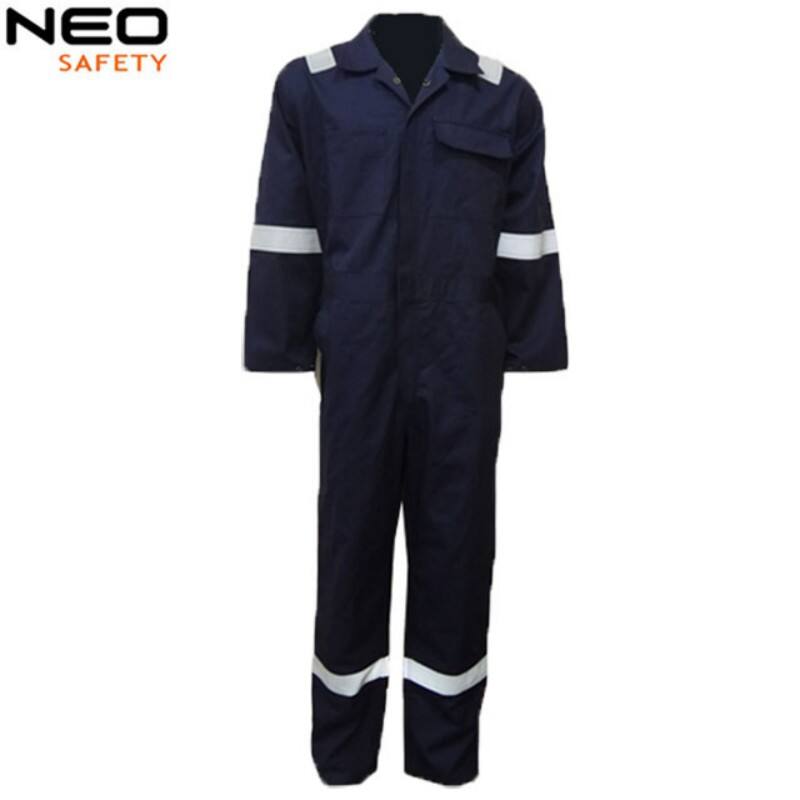
Coverage is a design factor that is sometimes overlooked in favor of fabric specifications. The garment must provide continuous protection across all areas of the body that could be exposed to the identified hazard. Coverall designs are particularly effective in this regard because they eliminate the gap risk that exists when separate jacket and trouser combinations are worn. For workers in environments with flash fire or arc flash risk, full-coverage fire resistant clothes in a coverall format are often the most reliable choice.
Ergonomic features such as articulated knees, gusseted crotches, and action-back panels allow workers to move freely without compromising coverage or placing stress on protective seams. These design elements are especially important in physically demanding roles where workers are frequently bending, climbing, or working in confined spaces. Fire resistant clothes that combine protection with genuine ergonomic design support both safety compliance and worker productivity.
High-Visibility Integration in Fire Resistant Clothes
Many industrial environments require workers to meet both flame protection and high-visibility standards simultaneously. Fire resistant clothes that integrate Class 2 or Class 3 reflective tape and fluorescent background fabric allow workers to satisfy both requirements in a single garment, which simplifies compliance and reduces the layering burden on workers in warm conditions. This integration is particularly relevant in construction, road maintenance, and utility work where traffic exposure and thermal hazards coexist.
When evaluating high-visibility fire resistant clothes, verify that the reflective tape itself is rated for use on flame-resistant garments. Standard reflective tape used on non-FR workwear may not maintain its integrity under thermal exposure and could potentially contribute to injury if it melts or ignites. Certified FR-compatible reflective materials are specifically engineered to perform alongside the protective fabric system rather than undermining it.
The placement of reflective tape on fire resistant clothes also affects both visibility performance and garment durability. Tape applied at the torso, arms, and legs in a configuration that meets ANSI/ISEA 107 or equivalent standards ensures that the garment delivers the required visibility from multiple angles. Proper tape placement also avoids areas of high flex stress where repeated bending could cause delamination over time.
Certification Standards and Compliance Considerations
Key Standards Governing Fire Resistant Clothes
Selecting fire resistant clothes without verifying certification compliance is a significant risk for any organization. The relevant standards vary by region and hazard type, but several frameworks are widely recognized across industrial markets. NFPA 2112 governs flame-resistant garments for protection against flash fire, specifying performance requirements for fabric, design, and labeling. NFPA 70E addresses arc flash protection and defines the hazard risk categories that determine the required ATPV rating for electrical work environments.
In European markets, EN ISO 11612 covers protective clothing against heat and flame, with multiple performance levels across different thermal hazard types. EN ISO 11611 addresses welding and allied processes. For high-visibility requirements, EN ISO 20471 defines the performance classes for reflective and fluorescent materials. Fire resistant clothes intended for international markets or multinational operations should be evaluated against the standards applicable in each jurisdiction where they will be used.
Beyond the fabric-level certifications, look for garments that have been tested and certified as complete assemblies. A fabric that passes a bench test may perform differently when sewn into a garment with specific seam constructions, closures, and design features. Assembly-level certification provides a more reliable assurance that the fire resistant clothes will perform as expected in real-world conditions.
Labeling, Care Instructions, and Traceability
Certified fire resistant clothes must carry permanent, legible labeling that identifies the applicable standards, the protection level, and the care instructions required to maintain that protection. This labeling is not merely a regulatory formality — it is a practical tool for safety managers and workers who need to verify that a garment is appropriate for a specific task and that it has been maintained correctly.
Care instructions for fire resistant clothes are particularly important because improper laundering can degrade protective performance, especially in chemically treated garments. Labels should specify approved washing temperatures, prohibited detergents or fabric softeners, and any restrictions on bleaching or dry cleaning. Organizations that launder workwear in-house or through industrial laundry services should establish documented procedures that align with the garment manufacturer's care requirements.
Traceability features such as lot numbers, manufacture dates, and individual garment identifiers support effective lifecycle management. Knowing when a garment was manufactured and how many wash cycles it has completed allows safety managers to retire fire resistant clothes before their protective performance falls below acceptable thresholds, rather than relying on visual inspection alone.
Practical Selection Criteria for Procurement Teams
Matching Garment Specifications to Workplace Hazard Profiles
Effective procurement of fire resistant clothes begins with a thorough hazard assessment. The specific thermal risks present in a workplace — whether flash fire, arc flash, molten metal splash, radiant heat, or a combination — determine the fabric type, weight, and certification level required. Purchasing fire resistant clothes without this foundation risks either under-protecting workers or over-specifying garments in ways that reduce comfort and compliance without adding meaningful safety value.
A hazard assessment should identify not only the type of thermal exposure but also its likely duration and intensity. A brief flash fire exposure calls for different garment specifications than sustained contact with radiant heat sources. The assessment should also consider secondary hazards such as chemical splash, abrasion, and visibility requirements, since fire resistant clothes often need to address multiple risk factors simultaneously in real industrial environments.
Once the hazard profile is established, procurement teams can use it as a filter to evaluate candidate garments objectively. Rather than comparing fire resistant clothes on price alone, the hazard profile provides a performance baseline that all candidate garments must meet before other factors such as cost, comfort, and supplier reliability are considered.
Evaluating Durability, Comfort, and Total Cost of Ownership
The purchase price of fire resistant clothes represents only a fraction of their true cost over a service life. Durability — measured in wash cycles, abrasion resistance, and seam integrity — determines how long a garment maintains both its physical condition and its protective performance. A lower-cost garment that requires replacement after fifty wash cycles may ultimately cost more than a higher-specification option that remains serviceable for twice as long.
Comfort is a practical safety factor, not a luxury consideration. Workers who find their fire resistant clothes uncomfortable are more likely to modify them, wear them incorrectly, or find reasons to remove them in situations where protection is required. Garments that balance protection with breathability, appropriate weight, and ergonomic design support consistent compliance across a workforce, which is the ultimate measure of a workwear program's effectiveness.
When calculating total cost of ownership for fire resistant clothes, factor in laundering costs, replacement frequency, the administrative burden of compliance management, and the potential cost of incidents that result from inadequate protection. This broader view of cost often shifts the procurement calculus toward higher-quality garments that deliver reliable protection over a longer service life.
FAQ
How often should fire resistant clothes be replaced?
The replacement interval for fire resistant clothes depends on the garment's construction, the frequency of use and laundering, and the results of regular inspection. Chemically treated garments should be evaluated against the manufacturer's stated wash durability rating, typically expressed as a number of wash cycles after which the flame resistance can no longer be guaranteed. Inherently resistant garments generally have longer service lives, but all fire resistant clothes should be retired immediately if they show signs of physical damage, significant fading of fluorescent materials, or degradation of reflective tape. A documented inspection and retirement protocol is the most reliable way to manage garment lifecycle.
Can fire resistant clothes be washed at home?
Home laundering of fire resistant clothes is possible for some garments but must be done strictly according to the care label instructions. Common restrictions include avoiding fabric softeners, which can coat fibers and reduce flame resistance, using only approved detergents, and adhering to specified temperature limits. Bleach is typically prohibited as it can degrade both the fabric and any chemical flame retardant treatment. For organizations managing large quantities of fire resistant clothes, industrial laundering services with documented FR-compatible processes are generally more reliable than home washing for maintaining consistent protective performance.
Do fire resistant clothes protect against all types of heat hazards?
Fire resistant clothes are engineered to address specific thermal hazards, and no single garment provides universal protection against all heat-related risks. A garment certified for flash fire protection may not provide adequate protection against arc flash, and vice versa. Similarly, fire resistant clothes are not designed to provide protection against prolonged contact with extremely high temperatures, such as those encountered in firefighting or foundry work, which require specialized proximity or approach suits. Always match the garment's certification and performance ratings to the specific hazards identified in your workplace risk assessment.
What is the significance of Class 2 reflective tape on fire resistant clothes?
Class 2 reflective tape on fire resistant clothes indicates that the garment meets the minimum retroreflective and fluorescent material requirements for workers exposed to traffic or moving equipment in conditions of reduced visibility. This classification is defined under standards such as ANSI/ISEA 107 in North America and EN ISO 20471 in Europe, and it specifies minimum areas of both background fluorescent fabric and retroreflective tape. When this high-visibility performance is integrated into fire resistant clothes, the reflective and fluorescent materials must also be compatible with the garment's flame resistance, meaning they should not melt, ignite, or otherwise compromise worker safety under thermal exposure.