 EN
EN
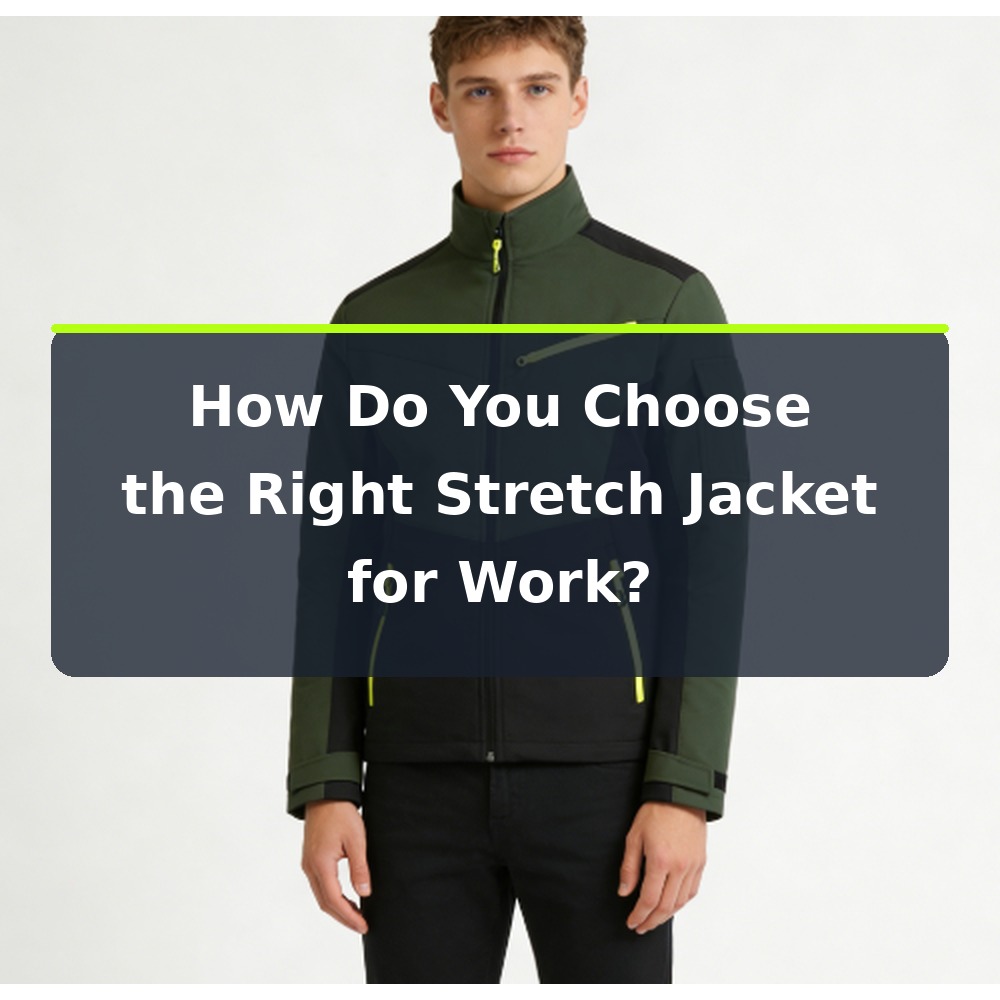
Buying a stretch jacket for yourself is a small experiment: wear it, feel it, keep or return it. Buying a stretch jacket for a whole team is different — the wrong choice gets worn every working day by every person, and the cost shows up as restricted movement, mid-season replacements and quiet complaints. The good news is that choosing the right stretch jacket comes down to six checks, and none of them requires technical equipment. All of them happen on sample day.
Check one: is the stretch really four-way?
The stretch jacket market has a loose vocabulary. Anything with a hint of elastane gets sold as a stretch jacket, but for work use the difference between two-way and 4-way stretch is the difference between comfortable and useless. Two-way stretch fabric gives horizontally only — fine for walking, defeated by reaching or squatting.
Test it on the sample. Pull the fabric across, then pull it lengthwise: a true 4-way stretch jacket gives in both directions. Then put it on and reach overhead, bend to the floor, swing the arms — a work-grade stretch jacket stays put through all three without riding up or binding at the shoulder. Ten minutes of movement testing tells you what a spec sheet may hide, and a genuine stretch work jacket passes all of it with no tight feeling when bending, climbing or lifting.
Check two: match the weather protection to real conditions
Most work-grade stretch jackets use softshell construction: a stretch fabric with a surface treatment that blocks cold wind and repels light rain. The windproof part matters most — wind strips heat from the body faster than still air, so a windproof stretch jacket keeps the wearer warm through outdoor all-day use without padded bulk.
But be honest about the water side. A water-repellent stretch jacket sheds drizzle, damp and light rain — the normal weather of a working day. It is not a raincoat, and any supplier who implies otherwise is overselling. Match the stretch jacket to the climate it will actually be worn in , not the worst storm on record.
Check three: decide whether visibility is built in or added on
If the jacket is worn near vehicles or machinery, visibility is not optional. The traditional solution layers a hi-vis vest over the work jacket; the modern one builds visibility into the stretch jacket itself — contrast color blocking with fluorescent zipper accents keeps wearers clearly seen while working, without a second layer fighting the stretch.
For certified hi-vis requirements, follow the site rules — a styled stretch jacket with accent visibility is design, and a certified safety garment. For general mixed-traffic areas, built-in accents on a stretch work jacket often do the job in one layer, and the grey-black contrast styling means it stays on.
Check four: check the sealing points
Warmth in a stretch jacket is decided at three points: the collar, the zip and the cuffs. A stand collar with a full front zip seals the neck — where body heat escapes fastest — and lets the wearer vent the moment work gets physical. Adjustable cuffs close the second escape route at the wrist. Test both on the sample: zip fully, cuff snugly, then move. The sealing should hold without restricting.
Check five: count the pockets that actually matter
Pocket layouts look generous in photos and disappoint in use. Judge a stretch jacket by the tasks of the workday: a zip chest pocket that keeps a phone or paperwork secure through bending and reaching; a sleeve utility pocket that puts small tools one motion away; storage that survives the same movement the fabric does. Skip pockets that cannot close — open pockets on a stretch jacket are donation boxes for small parts
Check six: turn the jacket inside out
Turn the sample inside out and look at the stress points: shoulder seams, pocket corners, cuff attachments. A stretch jacket carries more load at its seams than a stiff jacket does — stretch fabric transfers force directly into the stitching, so reinforced stitching at every stress point is what separates a stretch jacket that lasts a season from one that survives years of mechanical, construction and gardening work. Dense, tight stitching exactly where the fabric works hardest is the honest signature of a work-grade stretch jacket.
What ordering terms to expect
Custom stretch jacket programs typically run 500 pieces minimum per style and color, with customized samples in about a week and bulk production in 30 to 45 days. Confirm every term in writing before any deposit — and use the sample stage to run all six checks above, because that is the last moment to change your mind about a stretch jacket order.
Choosing a stretch jacket for work is six checks on sample day: four-way stretch verified by pulling and reaching, weather protection matched to real conditions, visibility built in or certified per the site rules, collar and cuffs that seal without restricting, pockets placed for the actual workday , and reinforced stitching at every stress point. A stretch jacket that passes all six keeps the wearer moving through bending, climbing and lifting .