 EN
EN

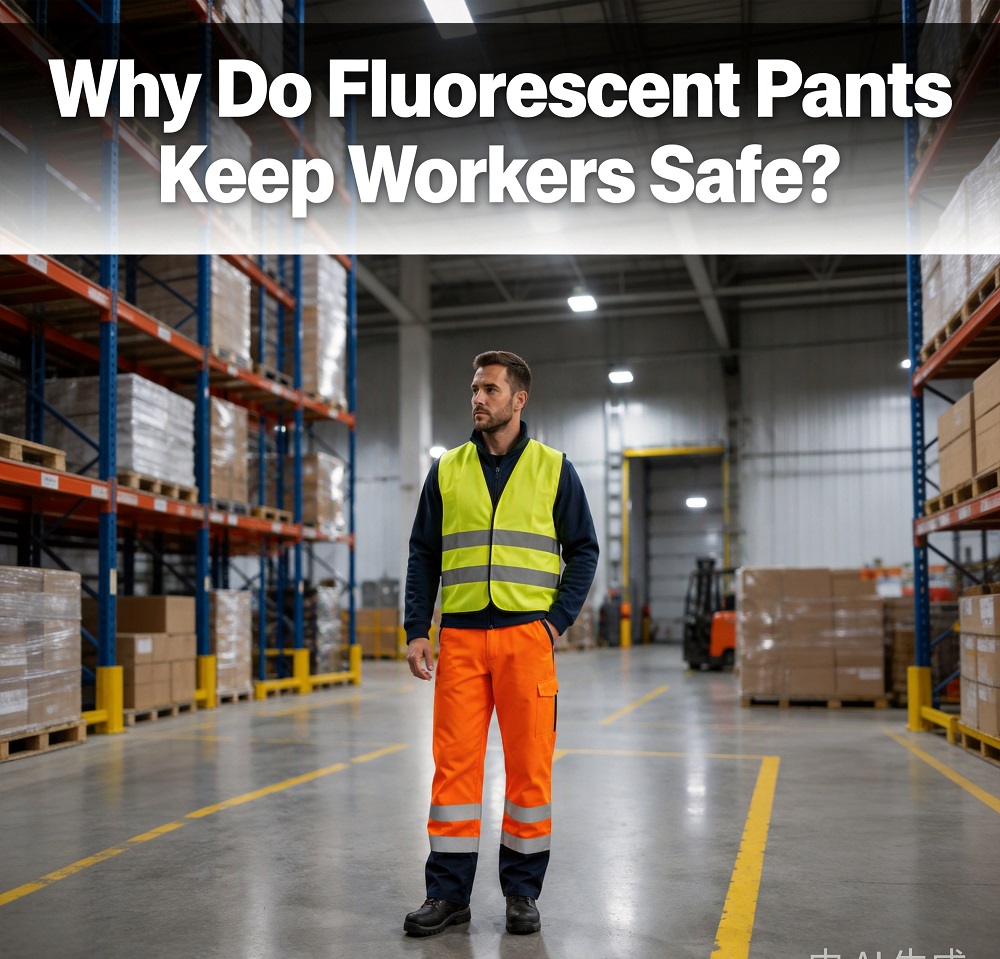
Drive past a road crew at dusk and one thing stands out before anything else: the fluorescent pants. Not the vests, not the trucks — the fluorescent pants, glowing orange or yellow-green against the asphalt. Most people assume that glow is just bright clothing. It is not. Fluorescent pants work because of two separate optical tricks stacked together, and understanding them is the difference between buying hi vis pants that protect your crew and buying colorful trousers that do not.
After years manufacturing hi vis pants and hi vis workwear, we still meet buyers who cannot explain why one pair of fluorescent pants passes EN ISO 20471 and an identical-looking pair of fluorescent pants fails. So here is the science, in plain language — and what it means for your next order of fluorescent work pants.
Fluorescence turns UV into visible light
Ordinary clothing can only reflect the light that hits it. Fluorescent fabric does something extra: it absorbs ultraviolet radiation — present in daylight even on overcast days — and re-emits that energy as visible light. Fluorescent pants literally glow, adding light to the scene instead of just bouncing part of it back.
That is why fluorescent pants look almost unnatural in daylight: they are emitting, not just reflecting.
Retroreflection sends light back to its source
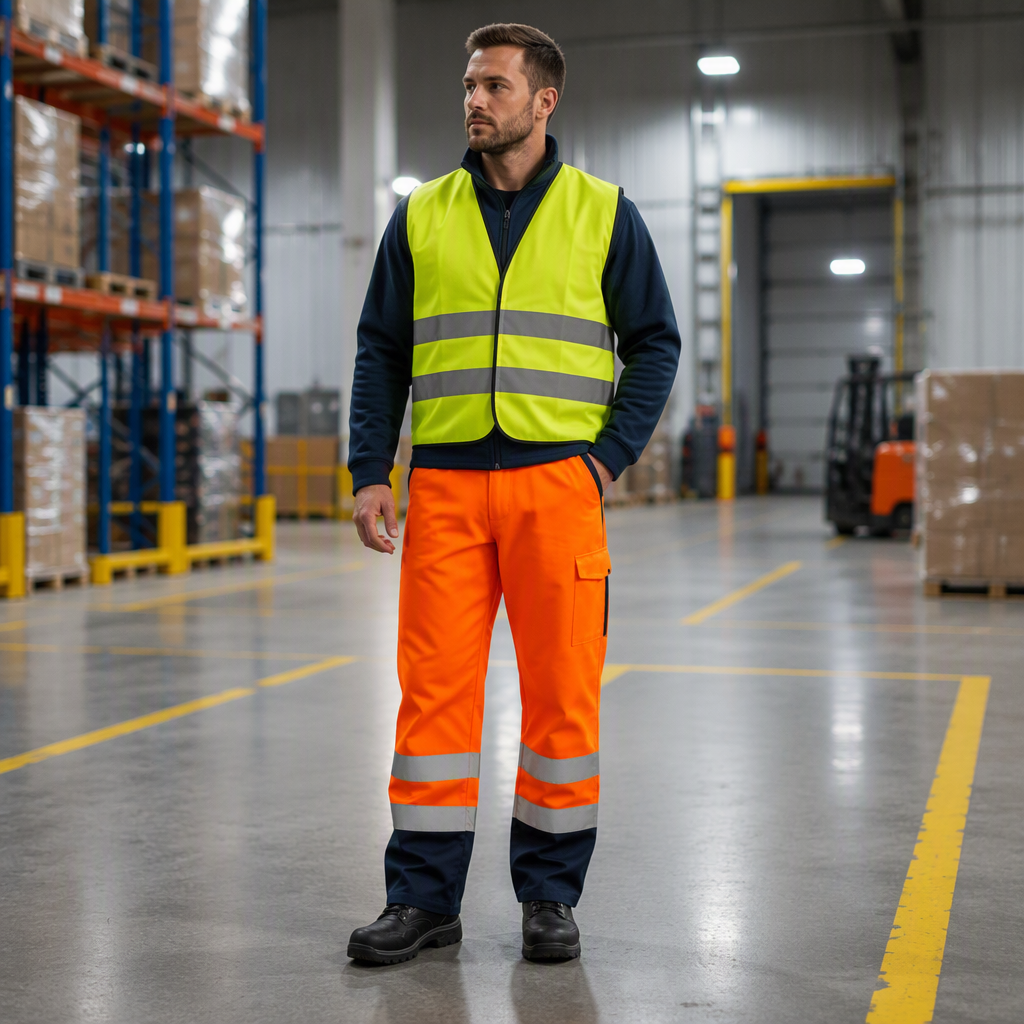
At night, the silver bands around the legs of fluorescent pants do the real work. These are retroreflective materials — micro glass beads or microprisms engineered to bounce light back toward the source, rather than scattering it in all directions like normal fabric.
The physics matters: a driver's headlights hit a worker's fluorescent pants, and the retroreflective bands return that light straight back to the driver's eyes. A worker 150 meters down the road becomes a bright signal at exactly the angle that matters. And because the bands circle each leg at calf height, fluorescent pants keep moving — and the human eye notices moving light far faster than static light. This is why reflective pants with two leg bands outperform a single chest stripe in real traffic: the legs move, the bands flash, the driver reacts.
Fluorescence and retroreflection are complementary by design: fluorescent color owns the daytime, reflective bands own the night. Remove either one, and the fluorescent pants fail the situation they were bought for.
What EN ISO 20471 actually requires?
EN ISO 20471 is the European high-visibility standard, and it splits garments into three classes based on how much fluorescent background material, reflective band area, and coverage the garment provides:
Class 1 is the lowest level, for low-risk areas away from traffic. Class 2 is the default for road work, airport ground crews, and logistics — this is the level most two-tone fluorescent work pants are built to, covering the required fluorescent body area and two horizontal reflective bands per leg. Class 3 is the highest, usually achieved with jackets or full-body sets rather than pants alone.
For buyers sourcing fluorescent work pants, one practical rule: the EN ISO 20471 certification applies to the configuration, not the fabric. A pair of hi vis pants needs the required fluorescent area and the correctly placed bands — which is why decorative silver stripes on fashion garments mean nothing, and why compliant fluorescent pants place their bands where the standard says, not where the designer prefers. Check that the colors of your fluorescent pants stay within the chromaticity range the standard defines — faded or off-spec dye lots fail the color test even when the tape is perfect.
Why two-tone fluorescent pants last longer ?
Anyone who has managed a uniform program of fluorescent pants knows the real enemy: wear and laundering. Solid fluorescent fabric fades fastest at the high-abrasion zones — knees, seat, hems — because fluorescent dyes sit close to the surface and lose their edge through friction and washing.
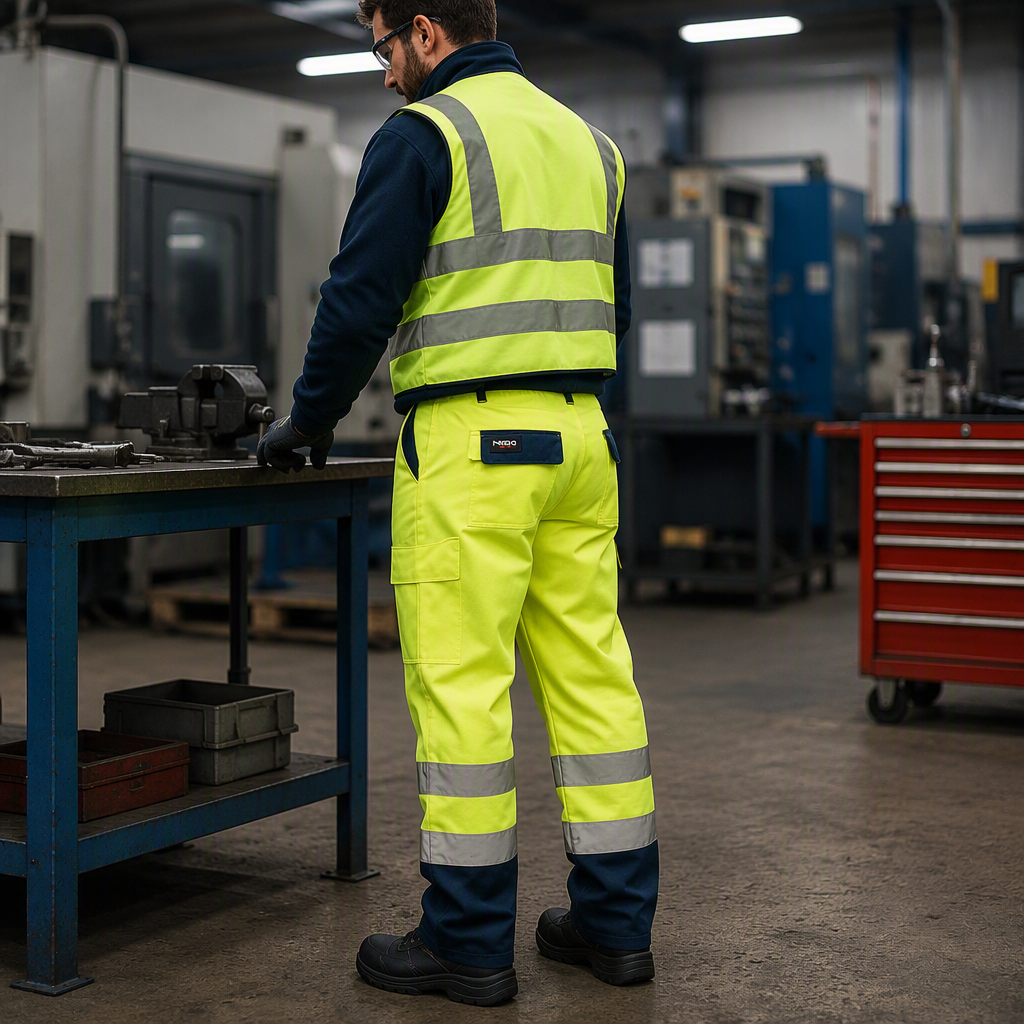
Two-tone fluorescent pants solve this with contrast panels: navy or black sections at the waistband, knees, and hems take the abuse, while the fluorescent material concentrates where it is visible and protected. The silhouette of two-tone hi vis pants stays readable because the contrast itself defines the shape — a worker in two-tone fluorescent pants is distinguishable even as the fluorescent zones age. The practical bonus: dirt and staining that would ruin solid fluorescent work pants barely shows on the navy panels, which is why rental and industrial laundry programs favor two-tone fluorescent pants.
What to specify when you order fluorescent pants?
Fabric and color: fluorescent pants in orange or yellow-green, confirmed within the standard's chromaticity range on the pre-production sample. Reflective bands: horizontal bands around each leg, positioned per the standard — and check the wash performance, because reflective power after 25+ wash cycles is what separates certified reflective pants from decorative ones. Certification to match the risk: Class 2 configuration for road and traffic-adjacent work — ask for the test report, not just the claim. Two-tone construction: contrast panels at wear zones to extend the service life of fluorescent work pants in laundry and daily site use. Fit for the work: loose straight-leg cut and an adjustable waistband, so the fluorescent pants can be worn over base layers and still move with the wearer.
Typical production terms for custom fluorescent work pants run 3000 pieces minimum per style and color, with customized samples in about a week and bulk production in 30 to 45 days — confirm yours in writing before any deposit.
The short version
Fluorescent pants keep workers safe because they stack two optical effects: fluorescent dye that turns ultraviolet light into visible glow by day, and retroreflective bands that throw headlight beams straight back at drivers by night. EN ISO 20471 Class 2 defines how much of each the garment must have for traffic work, and two-tone construction keeps fluorescent pants effective through months of real workwear laundering. That is the whole science — and it is why bright trousers from a fashion supplier will never substitute for certified fluorescent pants.
Sourcing fluorescent pants for a crew or a uniform program? Send us your target quantity and certification requirements — every program starts with a sample of fluorescent work pants checked against the spec.