 EN

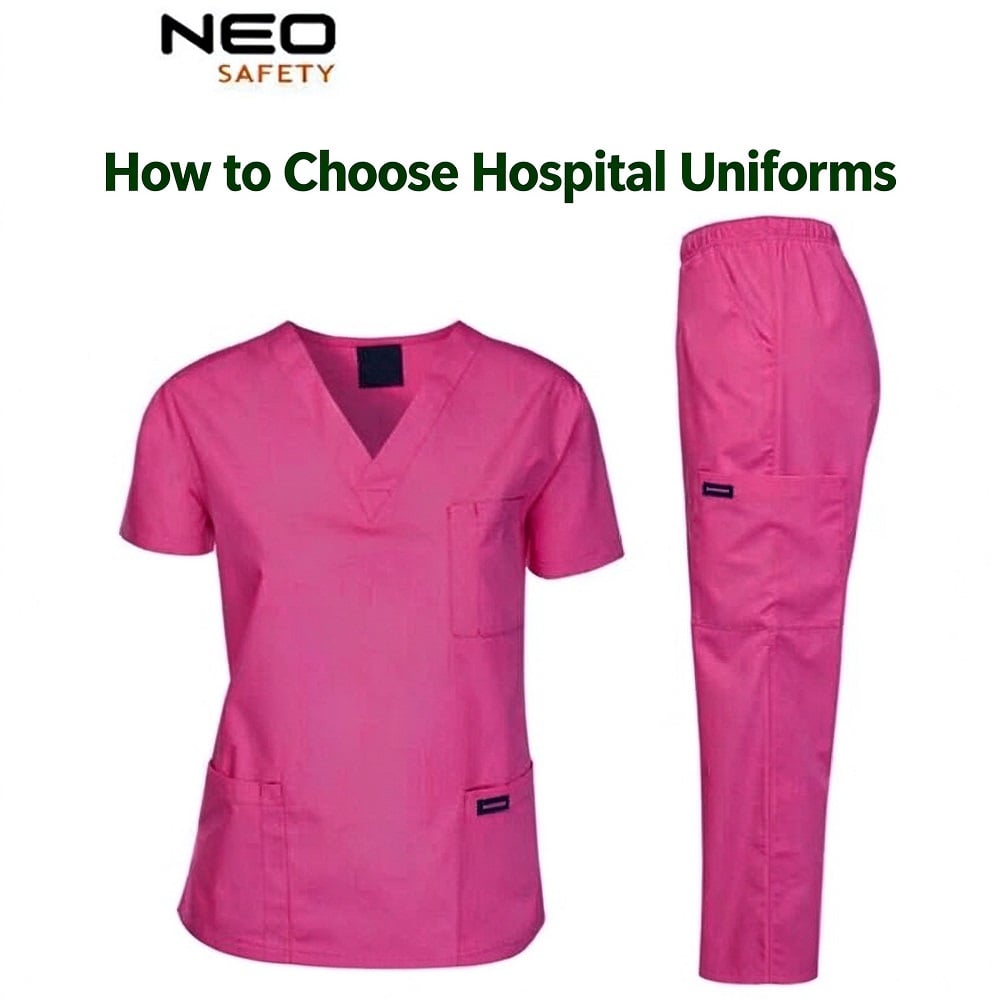
Choose hospital uniforms by matching the fabric to the laundering cycle, the fit to the staff role, and the color coding to the facility's identity system. Most sourcing failures come from one of three places: a fabric that pills or fades after a few industrial washes, a cut that restricts movement during long shifts, or a color scheme that does not separate roles the way the hospital needs. Work through those three first, then negotiate price.
This guide is written for hospital procurement teams, uniform rental suppliers, and brand owners producing hospital uniforms, medical scrubs and lab coats for the North American and European markets. Whether you run a single hospital, a rental program, or a private-label scrubs brand, the same checks apply when you source hospital uniforms at scale.
Start with the laundering reality
Hospital uniforms go through an industrial laundry cycle — high heat, chlorine bleach, and repeated wash and dry. Retail-style scrubs fall apart in that environment. When you ask a medical scrubs manufacturer for options, start with the fabric questions:
- Fiber blend. A poly-cotton blend (typically 65/35 polyester/cotton) is the default for hospital uniforms: polyester adds durability and wrinkle resistance, cotton adds breathability. Higher polyester content handles chlorine better; higher cotton content feels better against skin but fades and shrinks faster.
- Colorfastness under bleach. Ask how the fabric reacts to repeated chlorine bleaching. Dark medical scrubs fade to gray; cheap dyes blotch. The supplier should have wash-cycle test notes, not just a swatch book.
- Shrinkage. Pre-shrunk fabric matters. Compare measurements before and after a defined number of industrial wash cycles. Hospital uniforms that shrink two sizes after ten washes end up as a line-item loss, not a uniform program.
- Weight. Too light and the garment is see-through; too heavy and staff overheat. Medical scrubs typically run in a lighter weight than workwear, because healthcare workers spend long shifts indoors.
Garment |
Typical fabric role |
What to look for |
Scrubs top / pant |
Everyday uniform for clinical staff |
Poly-cotton, wrinkle-resistant, colorfast under bleach, side vents for movement |
Lab coat |
Doctors, lab, pharmacy |
Mid-weight, wrinkle-resistant, front closure, patch pockets, long sleeves |
Nurse / tech scrub |
Longer shifts, higher mobility |
Four-way stretch blend, side or back vents, elastic waist option |
Isolation / isolation-gown program |
Single or limited reuse |
Follow facility infection-control guidance; confirm weight and coverage |
Housekeeping / EVS uniform |
Heavy laundering, soil contact |
Higher polyester content, stain-resistant, reinforced stress points |
Do not assume one fabric solves every role. A hospital uniform program usually needs at least two fabric specs — a light clinical scrub fabric and a more durable EVS / housekeeping fabric.
Fit that survives a 12-hour shift
Fit is not comfort marketing. A scrub that binds when staff bend, reach into cabinets, or sit at a workstation gets complained out of rotation. Practical fit checks for hospital uniforms:
- Arm and shoulder mobility. Test reaching overhead and behind the back. Set-in sleeves work for basic use; raglan or knit shoulders move better for active clinical roles.
- Waist and rise. Pull-on scrub pants with a partial elastic waist and drawcord are the default; a flat-front option helps professional roles. Rise matters — too low and staff adjust all shift.
- Pockets that work. Medical scrubs live on pockets: chest pen pocket, side patch pockets, a sleeve pocket for a badge or phone. Pockets need to hold weight without sagging.
- Length. Sleeve and pant length should not require tailoring across your size range.
- Sizing run. Confirm the supplier covers the full size distribution your staff actually wears — not just S/M/L.
When you ask a lab coat supplier for samples, test the fit on real staff in working positions, not just on a hanger.
Color coding and identity
Hospitals use color to separate roles: registered nurses, technicians, doctors, EVS, food service, administrative staff. Before you order hospital uniforms:
- Define which colors map to which roles internally.
- Ask the manufacturer for a color card that stays consistent across reorders (dye lot control).
- Confirm the colors read well under hospital lighting — some blues and greens shift under fluorescent or LED.
- Reserve white (lab coats) and a neutral base for roles where identity matters.
Compliance notes (stay in your lane)
Hospital uniform compliance varies by region and by facility. We are a manufacturer, not a compliance consultant, but procurement teams usually ask:
- Whether the fabric meets any infection-control laundering standard the facility follows (the facility usually specifies this, not the supplier).
- Whether the garment can accept facility logos, name embroidery and role badges without distorting the fabric.
- For private label scrubs or rental programs, whether the supplier supports repeatable sizing, labeling and serialization.
Do not let a manufacturer promise a specific regulatory claim without documentation. Ask for the test method and the report.
Sample before you commit
Before you commit to a bulk order of hospital uniforms, run a small sample order. Have staff wear the samples through a full shift, wash them through the facility's actual laundry cycle, and check three things: fading, shrinkage, and how the fabric holds up at stress points (underarm, pocket corners, waistband). This is the step that catches problems a swatch book never will.
About KINGLONG (NEO SAFETY® / BIZLINK®): an SGS and ICS certified workwear manufacturer producing scrubs, lab coats, chef uniforms and hospitality garments for distributors, uniform rental programs and private-label brands. We support OEM/ODM with custom fabrics, colors, embroidery and size-range programs. Contact our team for fabric swatches and bulk pricing.