 EN
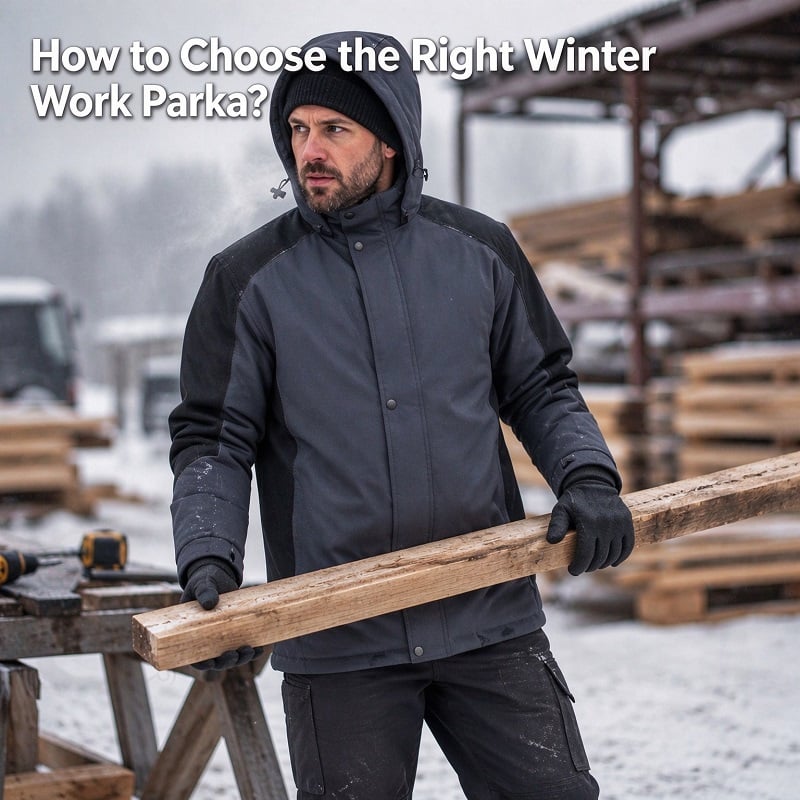
Before you compare fabrics or pricing, lock in two details.
- The typical outdoor temperature and wind exposure
- The kind of work your team does (heavy lifting, stationary patrol, freezer entry)
A parka that works great for a warehouse picker will not be enough for someone working 8 hours in a -18°C freezer. Likewise, a thick freezer parka is too bulky for crews climbing ladders and moving materials all shift.
Quick reference for active workers:
- 0°C to -10°C, intermittent outdoor exposure: standard insulated winter work parka
- -10°C to -20°C, continuous low temperature: freezer-rated parka with full sealing
- Mild, windy yards or patrol: focus on wind-blocking design more than extra thick fill
What shell fabric should you pick?
For most industrial buyers, oxford fabric with PU coating is our go-to recommendation. This is the shell used on our WH508 winter work parka, and it hits the sweet spot for durability and value.
Oxford weave resists scrapes from concrete, hand tools and pallet edges better than thin nylon. The PU coating adds water and stain repellency. Light snow, mud splashes and minor oil marks wipe off with a damp rag.
Do not confuse PU coating with heavy-duty waterproof membrane. This fabric sheds light rain and snow, but it will not hold up through hours of steady downpour. If your team works in constant heavy rain, look for parkas with taped seams and dedicated waterproof shells.
Avoid thin cotton shells for winter site work. Cotton stays wet and pulls heat away from the body, creating a serious cold risk once damp.
Insulation: synthetic fill beats down for workwear
Down is light and warm, but it fails the moment it gets wet. For jobs where sweat, snow or splashes are common, stick with polyester synthetic padding.
Synthetic insulation keeps its warmth even with some moisture. It washes better, does not clump easily, and is far more practical for repeated industrial laundering.
Check how evenly the padding is stitched through the body and sleeves. Cheap parkas often have loose fill that shifts, leaving cold spots across the back or arms after a few weeks of wear.
Lining details most buyers overlook
Taffeta lining is common on heavy-duty winter work parkas, and for good reason. It is smooth, so the jacket slides easily over thermal base layers and work shirts. Workers do not fight with stiff, catching fabric when they bend, lift or climb.
Fleece lining feels soft at first, but it catches lint, snags on tools, and wears out quickly for high-use crews. We only suggest fleece lining for low-activity roles like gate security.
Fit and functional features that matter on shift
Style choices do not matter much here. Mobility and usability do.
Look for these features when you evaluate samples:
- Adjustable hood with drawcord. It pulls tight around the head to block wind, and loosens for indoor breaks. Fixed hoods are simpler and less likely to catch on scaffolding.
- Adjustable cuffs. Hook-and-loop cuffs seal over gloves and stop cold air from running up sleeves.
- Drawcord hem. Stops drafts from blowing up the jacket when workers bend over.
- Multiple reinforced pockets. Side pockets for hand warmth, chest pockets for ID or radio, an inner secure pocket for phones. Pocket seams should be bartacked, as these are the first spots to tear.
A good rule: send sample parkas out to your actual crew for a one-week trial. Managers often pick a parka that looks good on a rack, while workers spot tight shoulders, shallow pockets or restrictive sleeves within a single shift.
Match the parka style to your job role
Construction and road maintenance crews
Prioritize abrasion resistance first. Heavy oxford PU shell, reinforced seams, deep utility pockets. Workers here move constantly, so avoid overly bulky insulation that limits arm movement.
Warehouse, yard and logistics staff
Most warehouses stay above freezing but have cold drafts from loading doors. Go for mid-weight insulation, a clean cut for lifting, and pockets built for scanners and work phones. Stain-resistant fabric is a big plus, as pallet dust and cargo marks add up fast.
Security and property patrol teams
These crews often stand still for long stretches, so wind protection counts more. Many clients also want a neat, uniform look. Reserve styles with space for embroidered logos, epaulets or badge placement. Hidden inner pockets for radios are a top request.
Cold storage and freezer teams
Standard winter work parkas are not enough. Look for extra thick insulation, fully sealed hood and cuffs, and fabric rated to resist frost buildup. Pair parkas with matching insulated trousers for full protection.
Care tips to make your parkas last longer
Workwear is an investment, and poor washing cuts its usable life nearly in half. Share these simple rules with your laundry team:
- Wash on gentle cycle, cold or lukewarm water, mild detergent
- Skip bleach, fabric softener and strong degreasers; they break down the PU coating
- Air dry or tumble dry on low heat. High heat melts coating and crushes insulation
- Wipe light dirt and splashes down between washes instead of laundering every time
Common mistakes we see with bulk orders
- Buying only by price per piece. A cheaper parka that rips in 3 months costs more than a durable one that lasts two winters. Calculate total annual replacement cost instead.
- Skipping samples. Fabric thickness and fit vary widely between factories. What looks identical in photos can feel completely different in person.
- Over-specifying insulation. Too much bulk slows workers down and leads to overheating during active jobs.
- Ignoring size range. Many standard lines stop at 3XL. If you have a diverse team, confirm extended sizes before placing a big order.
Frequently Asked Questions
Q: What temperature is a standard winter work parka good for?
A: Our standard oxford PU winter work parka works well for active work from 0°C down to roughly -10°C, when paired with a thermal base layer. Freezer-grade versions handle continuous work down to -20°C.
Q: Are PU coated oxford parkas fully waterproof?
A: They repel light rain, snow and splashes. They are not built for long exposure to heavy, steady rain. For that scenario, select parkas with taped waterproof seams.
Q: Can we add our company logo to bulk winter work parka orders?
A: Yes. Embroidery holds up best for heavy industrial use. Screen printing and heat transfer are lower cost options. Minimum quantities depend on whether you add logos to existing stock or custom build the whole garment.
Q: How many seasons should a quality winter work parka last?
A: With proper care, a heavy-duty winter work parka used 5 days a week usually lasts 1.5 to 3 winter seasons. Heavy construction use will shorten that timeline slightly.
Q: Is a detachable hood better?
A: It depends. Detachable hoods add versatility but create extra seams that can leak. Most industrial clients pick fixed adjustable hoods for simpler, tougher field use.
If you are sourcing winter work parkas for your team, reach out to request fabric specs and physical sample options. Our WH508 winter work parka is stocked for quick bulk shipments and supports custom branding for uniform programs.
Table of Contents
- What shell fabric should you pick?
- Insulation: synthetic fill beats down for workwear
- Lining details most buyers overlook
- Fit and functional features that matter on shift
- Match the parka style to your job role
- Care tips to make your parkas last longer
- Common mistakes we see with bulk orders
- Frequently Asked Questions