 EN
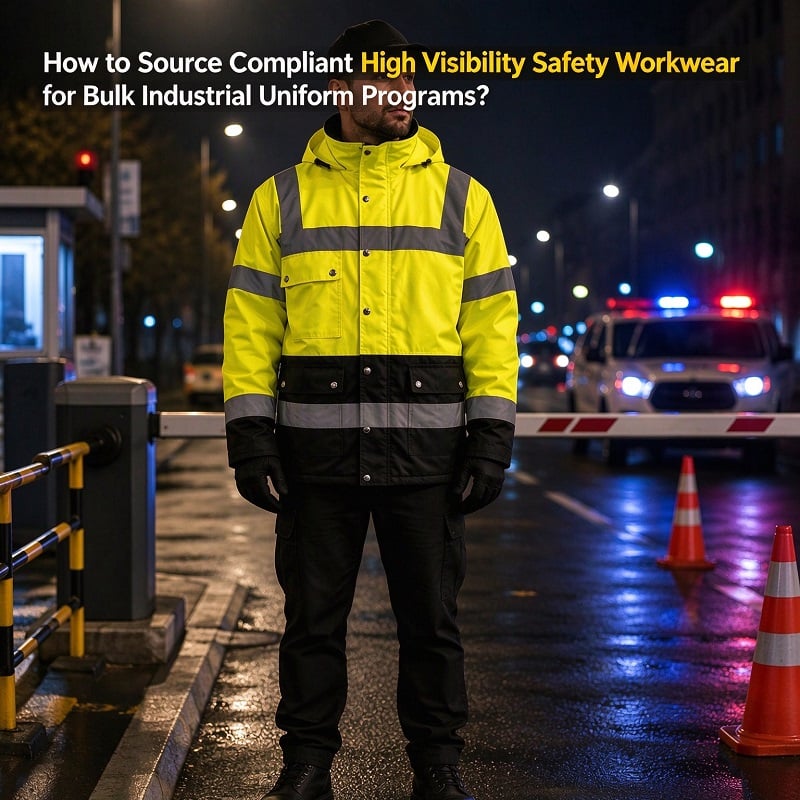
For site safety officers and industrial uniform procurement managers, selecting the right high visibility safety workwear is more than a uniform decision — it is a legal compliance and worker safety requirement. Across construction, roadwork, logistics and utility sectors, non-compliant hi-vis workwear can lead to regulatory fines, increased on-site accident risk and costly frequent uniform replacements. As an EN ISO 20471 certified workwear manufacturer with 20+ years of supplying high visibility safety workwear to European industrial clients, we often see buyers make avoidable mistakes when placing bulk orders. This guide breaks down official compliance standards, common sourcing pitfalls and step-by-step selection criteria to help you source high visibility safety workwear that meets both regional safety rules and long-term durability needs.
What Defines Genuine Compliant High Visibility Safety Workwear
Not all brightly colored workwear qualifies as regulated high visibility safety workwear. Genuine protective hi-vis garments must meet strict material, design and performance standards to deliver reliable visibility in both daylight and low-light conditions.
The core global benchmark for industrial high visibility safety workwear is EN ISO 20471, which classifies products into three performance classes based on the total area of fluorescent background material and retro-reflective tape. Class 3 provides the highest level of visibility for high-risk roadside and night work, Class 2 is the standard for most construction and logistics sites, and Class 1 applies only to low-risk off-road support roles. For products sold into the European Economic Area, compliant high visibility safety workwear must also carry CE certification under the PPE Regulation (EU) 2016/425, issued by an authorized notified body.
Many low-cost suppliers market bright colored work shirts as hi-vis safety wear without meeting these minimum area requirements. These products will not pass safety audits and leave employers exposed to liability if a worksite incident occurs.
Why Budget High Visibility Safety Workwear Costs More Long Term
Upfront unit price is the most common comparison point for bulk uniform orders, but our 20-year field performance data shows that budget high visibility safety workwear almost always delivers higher total cost of ownership.
The first hidden cost is early reflective failure. Cheap high visibility safety workwear typically uses low-grade retro-reflective tape that cracks, peels or loses reflectivity after 10 to 15 industrial washes. Premium grade tape retains its reflectivity through 50 plus washes, meaning the garment stays compliant for its entire service life. For teams with weekly uniform laundering, this means budget hi-vis workwear loses compliance in 3 to 4 months, while premium high visibility safety workwear stays compliant for 12 months or more.
The second hidden cost is regulatory and safety risk. Non-compliant high visibility safety workwear fails official safety audits, can result in site shutdowns and fines, and reduces worker visibility in low-light conditions where most struck-by incidents happen. For high-risk sectors like road construction and railway maintenance, this risk alone justifies investing in verified compliant products.
Matching High Visibility Safety Workwear Classes to Job Roles
Choosing the correct class of high visibility safety workwear for each role ensures compliance without overspending on unnecessary protection.
Class 3 high visibility safety workwear is required for workers on or near active traffic lanes, railway lines and night-time construction sites. These garments have the largest area of fluorescent fabric and full-circumference reflective strips on both the torso and sleeves, delivering maximum visibility from all angles.
Class 2 high visibility safety workwear is the standard for most general construction sites, warehouse loading docks, utility field crews and airport ground staff. It balances sufficient visibility for daytime and low-light work with all-day wearing comfort, and is the most commonly ordered tier for bulk industrial uniform programs.
Class 1 high visibility safety workwear is intended only for low-risk off-road roles where workers are separated from moving vehicles and equipment. It is not suitable for roadside or active worksite use.
For multi-role workforces, we recommend building a tiered high visibility safety workwear program rather than purchasing the same grade for every position, which reduces overall uniform spend while maintaining full compliance for high-risk roles.
4 Quality Checks for Bulk High Visibility Safety Workwear Orders
Before finalizing a bulk purchase of high visibility safety workwear, use these four verification steps to confirm compliance and long-term durability.
First, verify full certification documentation. Ask for the CE certificate number and the notified body details, then cross-check the number in the European Commission NANDO database. Valid high visibility safety workwear certification will list the exact standard, performance class and notified body authorization scope.
Second, run a wash test on sample units. Wash 2 to 3 sample garments through 10 standard industrial wash cycles, then inspect the reflective tape for cracking, peeling or edge lifting. Quality high visibility safety workwear will show no visible degradation after 10 washes.
Third, check fluorescent fabric color fastness. Expose sample fabric to simulated sunlight or run a light fastness test. Low-grade fluorescent fabric fades quickly under UV exposure, losing its daytime visibility within a few months of outdoor use.
Fourth, inspect construction and reinforcement. High visibility safety workwear for industrial use should have double-stitched main seams, reinforced stress points and durable closure hardware. Garments that fall apart at the seams will need replacement long before their reflective performance expires.
Final Sourcing Recommendations
High visibility safety workwear is a safety-critical purchase, not a commodity uniform item. The cheapest option almost always carries hidden costs in shorter service life, non-compliance risk and reduced worker protection. For bulk uniform programs, the best value comes from verified compliant high visibility safety workwear from manufacturers with documented certification and a track record of supplying industrial clients.
Always order pre-production samples for wash and wear testing before committing to a full bulk shipment, and confirm that repeat orders will use the exact same reflective tape and fluorescent fabric to maintain consistent compliance across reorders.
Explore our full range of EN ISO 20471 compliant high visibility safety workwear for all three performance classes, or contact our team for a custom uniform program recommendation matched to your worksite roles and compliance requirements.