 EN
EN
The modern workforce demands more from its clothing than ever before. Whether operating on a construction site, managing a warehouse floor, or working in a utilities environment, professionals require work trousers that go beyond basic coverage and protection. Over the past decade, significant innovations have transformed what these garments can deliver — blending ergonomic design, advanced materials, and smart functional features into a single piece of workwear that genuinely enhances on-the-job performance.
Understanding which specific innovations actually make a measurable difference is essential for procurement managers, safety officers, and workers themselves. Not every upgrade is equally valuable across all job functions, and selecting the right work trousers requires knowledge of what current technology genuinely offers. This article explores the key design and material innovations that are reshaping the standard for comfort and efficiency in professional workwear trousers today.
Advanced Fabric Technologies Redefining Performance
Stretch and Flexibility Engineering
One of the most impactful innovations in modern work trousers is the integration of four-way stretch fabric. Traditional workwear was often rigid, limiting the range of motion for workers who needed to crouch, climb, or perform physically demanding tasks. Four-way stretch weaves — typically achieved through the incorporation of elastane or spandex blended with durable base fibers — allow movement in all directions without resistance or fabric distortion.
This flexibility directly reduces worker fatigue. When clothing restricts movement, the body compensates by exerting additional muscular effort, which accumulates over a long shift. Stretch-engineered work trousers minimize this compensation effect, meaning workers expend less energy on movement and retain more stamina for productive tasks. For industries like construction, electrical services, and logistics, this is not a minor comfort enhancement — it is a genuine efficiency gain.
Modern stretch fabrics also maintain their structural integrity over repeated industrial washing cycles, a critical factor in professional workwear longevity. The blend ratios are carefully engineered so the trousers retain their shape, resist sagging, and continue to provide the intended freedom of movement over months of regular use.
Breathability and Moisture Management
Heat stress is a significant occupational hazard in many industrial environments. Innovative work trousers now incorporate breathable fabric constructions that promote airflow and accelerate moisture evaporation, keeping the wearer cooler and drier across extended working periods. These fabrics often use open-weave structures or moisture-wicking fiber technologies to pull sweat away from the skin and disperse it across the fabric surface for rapid evaporation.
Breathable work trousers also contribute to hygiene management in high-activity roles. Reduced moisture buildup means lower bacterial growth, fewer odors, and a more comfortable working experience overall. For workers in outdoor environments, transport sectors, or physically intensive roles, breathability is not a luxury — it is a direct contributor to sustained concentration and task performance.
Some premium designs layer breathable panels into high-heat zones such as the inner thigh and knee areas, targeting the specific regions where heat and friction are most concentrated. This zonal approach to breathability represents a more sophisticated level of garment engineering than simple full-fabric ventilation.
Waterproofing and Environmental Protection Features
Durable Water Repellency Treatments
Workers in outdoor, infrastructure, or civil engineering roles regularly face wet conditions that traditional work trousers simply could not handle without becoming heavy, uncomfortable, and slow-drying. Modern durable water repellency (DWR) treatments applied to the outer surface of fabric cause water to bead and run off rather than soak into the material. This keeps the trousers lightweight and the wearer dry even during moderate rain exposure.
DWR-treated work trousers achieve a critical balance: they repel external moisture while still allowing internal moisture vapor — sweat — to escape. This is a significant improvement over older rubberized or coated workwear that blocked all moisture transfer, trapping heat and perspiration inside the garment. The result is protection from the elements without sacrificing breathability or comfort.
It is worth noting that DWR treatments do require periodic reactivation through tumble drying or reapplication, and procurement decisions should account for the maintenance requirements of waterproof work trousers in high-use industrial environments. However, the functional benefits across the garment's lifespan far outweigh this maintenance consideration.
Abrasion and Contamination Resistance
Beyond water resistance, modern work trousers are engineered to resist abrasion in high-wear zones — particularly the knees, seat, and inner thigh areas where contact and friction are most frequent. Reinforced panels in these areas use denser weave structures or bonded overlays that dramatically extend the useful life of the garment.
Contamination-resistant finishes also form part of the innovation landscape for work trousers used in food processing, pharmaceutical manufacturing, and clean industrial environments. These treatments prevent particulates, oils, and other workplace substances from penetrating the fabric, making the trousers easier to clean and compliant with stricter hygiene standards.
Ergonomic Design and Fit Innovations
Articulated Knee and Gusseted Crotch Construction
Ergonomic patterning is one of the less visible but most practically significant innovations in contemporary work trousers. Articulated knee construction pre-shapes the fabric around the natural bend of the knee, eliminating the resistance felt when bending and reducing stress on the seams in this high-movement area. Workers who frequently kneel, crouch, or climb benefit substantially from this design feature.
The gusseted crotch — a diamond-shaped fabric insert at the crotch seam — is another ergonomic advancement that has become standard in quality work trousers. This insert allows a wider range of leg movement without placing tensile stress on the central seam, which is traditionally one of the first failure points in workwear garments. Gusseted construction directly extends garment life while simultaneously improving mobility.
These ergonomic features, combined with stretch fabrics, create work trousers that move with the body rather than against it. This alignment between garment geometry and human movement patterns is a defining characteristic of next-generation workwear design.
Waistband and Fit Adjustability
Fixed-size waistbands have long been a source of discomfort in work trousers, particularly for workers who carry tools, wear belt-mounted equipment, or experience weight fluctuations. Modern innovations include elasticated waistband panels, adjustable side tabs, and multi-button waistband configurations that allow workers to fine-tune their fit throughout the day.
Some work trousers now incorporate elastic inserts at the rear waistband that expand during seated work or bending, then return to their original form when standing. This dynamic fit adjustment prevents the uncomfortable waistband gap common when crouching, a small but meaningful quality-of-life improvement for workers spending long periods in varied postures.
Functional Storage and Tool-Carrying Innovations
Cargo Pocket Engineering
The cargo pocket has evolved considerably beyond its origins as a simple additional storage compartment. Modern work trousers with engineered cargo pockets feature shaped closures, reinforced stitching, and internal organization systems that allow tools, devices, and accessories to be carried securely without affecting the wearer's gait or balance. Magnetic or hook-and-loop closures have replaced many traditional button or snap systems, offering faster and more reliable access.
Positioning of cargo pockets has also been refined. Poorly positioned pockets that sit too low or too far outward add awkward weight distribution that tires the legs over long shifts. Contemporary work trousers position cargo pockets at ergonomically optimal heights — typically mid-thigh — so that carried items remain accessible without disrupting natural movement patterns.
For trades professionals who carry smartphones, measuring devices, pens, and smaller tools, integrated organizer pockets within cargo sections represent a significant workflow improvement. Workers can locate and retrieve items without breaking task focus, which cumulatively saves meaningful time across a full working day.
Knee Pad Pocket Integration
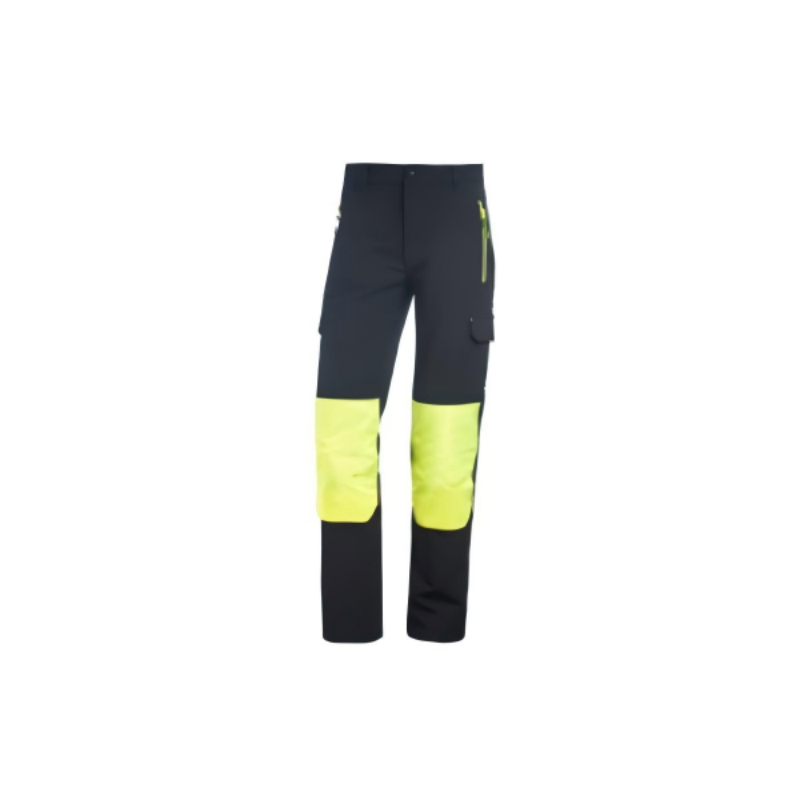
One of the most practically valuable innovations in work trousers for trades and construction workers is the integrated knee pad pocket. Rather than wearing external knee pads that shift, fall, and restrict movement, these purpose-built pockets hold insertable foam or gel knee pad inserts in a fixed position directly at the knee.
Workers can insert protective pads when kneeling work is anticipated and remove them when unnecessary, maintaining comfort and mobility throughout varied task sequences. This modularity means a single pair of work trousers can serve effectively across a wider range of job conditions without compromise, reducing the need for multiple specialized garments.
Safety Compliance and High-Visibility Enhancements
Reflective and High-Visibility Panels
Safety regulations in road construction, utilities, and rail sectors mandate high-visibility garments in active traffic or machinery zones. Innovations in work trousers have made it possible to integrate reflective strip systems and fluorescent fabric panels directly into the trouser design without compromising the ergonomic and comfort features described above. These integrated high-visibility elements meet compliance standards while maintaining a garment that workers are willing to wear throughout the entire shift rather than removing at the first opportunity.
The integration of retroreflective tape in segmented rather than continuous bands also improves garment flexibility, as rigid reflective strips across the knee area previously restricted bending. Segmented designs allow full movement while preserving the required surface area of reflective material for regulatory compliance.
Flame-Resistant and Arc-Flash Rated Fabrics
For electrical workers and those in petrochemical environments, flame-resistant (FR) work trousers represent a non-negotiable safety requirement. Modern FR fabric innovations have significantly improved the comfort profile of compliant garments, addressing the historical perception that FR workwear was heavy, stiff, and uncomfortably hot.
Contemporary FR-rated work trousers use inherently flame-resistant fiber blends or durable treated cotton constructions that maintain their protective properties through multiple industrial wash cycles. Critically, newer FR fabric technologies have achieved comfort and breathability levels approaching those of standard workwear, removing one of the most common barriers to consistent FR garment compliance among workers.
FAQ
What makes modern work trousers more comfortable than traditional workwear?
Modern work trousers improve comfort through a combination of stretch fabric engineering, ergonomic patterning including articulated knees and gusseted crotch construction, breathable moisture-wicking materials, and adjustable waistband systems. Together, these innovations reduce movement restriction, manage body heat, and allow the garment to adapt to varied postures throughout the working day.
How do waterproof work trousers maintain breathability?
Waterproof work trousers use durable water repellency (DWR) surface treatments that cause external water to bead and run off while allowing internal moisture vapor to escape through the fabric structure. This differs from fully coated or rubberized garments, which block all moisture transfer. The result is protection from environmental moisture without trapping body heat or perspiration inside the trousers.
Are cargo pockets in work trousers actually useful for professional trade workers?
Yes, when properly engineered. Modern cargo pockets in quality work trousers are positioned at ergonomically optimal heights, feature secure and fast-access closures, and include internal organization systems for tools and devices. Poorly designed cargo pockets can add uncomfortable weight imbalance, but well-positioned and structured cargo pockets genuinely improve tool accessibility and workflow efficiency during the working day.
How do I choose the right work trousers for a physically demanding role?
Selecting work trousers for physically intensive work should prioritize four-way stretch fabric for mobility, ergonomic patterning for movement support, reinforced panels in high-wear zones for durability, and breathability for thermal comfort. If the role involves wet conditions, DWR treatment is important. If it involves kneeling, integrated knee pad pockets are highly recommended. Match the specific innovations to the specific demands of the job rather than selecting purely on general specifications.