 EN
EN
In professional environments where performance meets presentation, the choice of work trousers carries far more weight than most people initially assume. Whether you are outfitting a team of field technicians, managing a hospitality workforce, or sourcing uniforms for a logistics operation, the fabric quality and design of work trousers directly affect how workers feel, move, and represent your brand throughout a demanding shift. Selecting premium work trousers is not simply a purchasing decision — it is a strategic investment in both workforce wellbeing and professional image.
The modern workwear market offers a wide range of work trousers options, yet the difference between average and truly elevated workwear lies in the details — the material composition, the construction method, the ergonomic design, and how all these factors align with the demands of the job role. This article walks through the critical factors that define premium work trousers, helping procurement managers, HR professionals, and business owners make informed, confident decisions that genuinely elevate their workwear programs.
Understanding the Role of Fabric in Premium Work Trousers
Why Fabric Choice Defines Workwear Quality
When evaluating work trousers, fabric is the single most important variable that determines overall quality, durability, and worker comfort. The fabric must be capable of withstanding repeated laundering, physical stress, and environmental exposure without losing structural integrity or visual appeal. A premium fabric ensures that work trousers maintain their professional appearance shift after shift, month after month, which is essential for any organisation committed to consistent brand standards.
Different industries demand different fabric properties. A construction crew requires abrasion resistance and reinforcement, while hospitality staff need lightweight, breathable fabric that retains a polished look under warm indoor conditions. Understanding these distinctions allows buyers to match fabric performance to real-world job demands, ensuring that every pair of work trousers genuinely serves its intended purpose rather than simply meeting a generic specification.
Fabric weight is another critical consideration. Mid-weight fabrics in the range of 200 to 300 grams per square metre tend to offer the best balance between durability and comfort for most professional settings. Heavier fabrics provide greater resistance to tearing and abrasion, while lighter options prioritise breathability and ease of movement. Premium work trousers are often engineered with this balance in mind, using technical textile blends that deliver multiple performance attributes simultaneously.
Oxford Fabric and Its Advantages for Work Trousers
Oxford fabric has emerged as a particularly valued material in the professional workwear segment, and for good reason. The distinctive basket-weave construction of Oxford fabric produces a surface that is notably resistant to wear, snagging, and scuffing — precisely the kinds of stresses that work trousers encounter in active job environments. The weave also gives the fabric a structured, professional appearance that holds its shape well even after extended use and multiple washes.
In addition to durability, Oxford fabric offers practical benefits in terms of care and maintenance. Its tight weave resists dirt penetration, making it easier to clean and less likely to retain stains after washing. For organisations managing large uniform programs, this translates into lower maintenance costs and a longer service life per garment. Investing in work trousers made from quality Oxford fabric is a smart economic decision as well as a performance one.
The material also has commendable breathability relative to its weight, ensuring that workers wearing Oxford-fabric work trousers remain comfortable across long shifts. This is a significant factor in environments where employee comfort directly influences productivity and morale. When sourcing professional work trousers, Oxford fabric constructions represent a strong benchmark for what premium quality should deliver.
Design Elements That Elevate Work Trousers Beyond the Basics
Ergonomic Cut and Fit for Active Professionals
Premium work trousers are distinguished not only by fabric quality but by how thoughtfully their design accommodates the physical demands of the work environment. An ergonomic cut allows for a full range of motion — bending, crouching, climbing, and reaching — without the fabric pulling, binding, or distorting the garment's shape. This is especially critical for roles in field services, maintenance, and manual trades where restricted movement is not just uncomfortable but potentially hazardous.
The waistband design is one of the most frequently overlooked aspects of work trousers quality. A well-engineered waistband should sit securely without digging into the wearer during movement, and it should retain its shape and tension over time without sagging or stretching out. Reinforced waistbands with integrated belt loops and adjustable features are hallmarks of premium design that show attention to real-world user needs rather than just visual aesthetics.
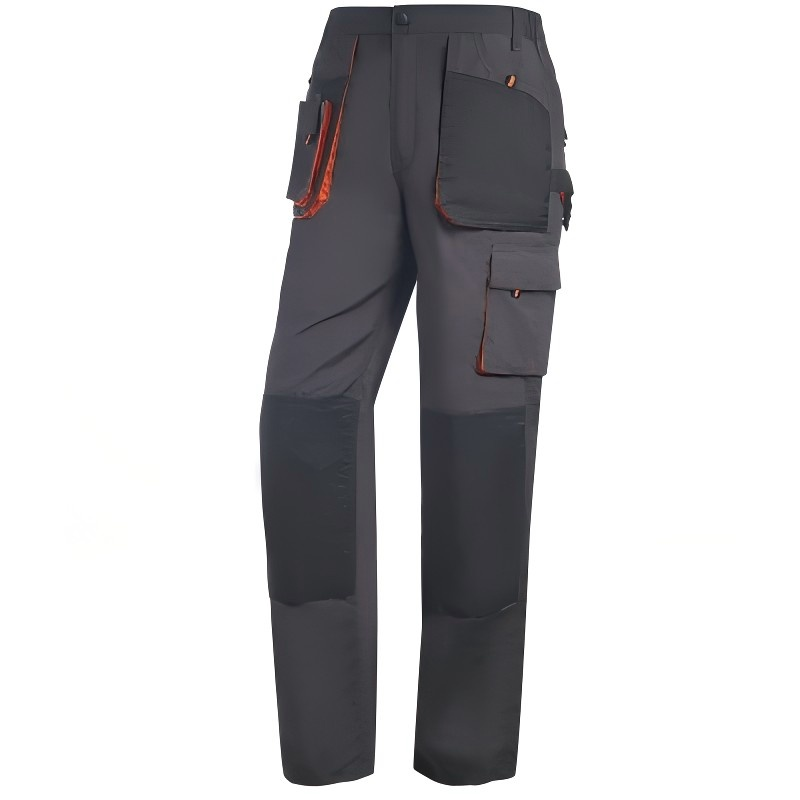
Seam placement and construction method also play a major role in ergonomic performance. Flatlock seams, gussets at critical stress points, and articulated knee panels are design features found in high-quality work trousers that actively enhance movement and reduce the physical strain on the garment. These details may not be immediately visible to the eye, but they make a noticeable difference in how the trousers perform and how long they last under daily use.
Pocket Configuration and Functional Layout
Functional design goes beyond cut and fit — it extends to how well work trousers are equipped to support the tools and accessories that workers need on the job. Pocket configuration is a meaningful design variable. Cargo pockets, side-access utility pockets, and reinforced tool loops all serve specific functional purposes, and their placement must be thoughtfully integrated into the garment without adding unnecessary bulk or disrupting the professional silhouette of the trousers.
For office-based or customer-facing roles, minimalist pocket design with clean lines often makes a stronger professional impression. In contrast, tradespeople and logistics workers frequently benefit from work trousers with generous, deep pockets that can accommodate phones, measuring tools, or documentation without requiring workers to carry additional pouches or bags. The right pocket design reduces friction in the workday and contributes meaningfully to job efficiency.
Zipper quality on pockets and closures is another marker of overall garment quality that buyers should examine closely. Cheap zippers fail quickly under regular use and can compromise both the functionality and appearance of otherwise well-made work trousers. Premium work trousers use hardware that matches the durability standard of the fabric itself, ensuring that every component of the garment holds up to the demands of professional use.
Durability and Longevity: The True Cost of Quality Work Trousers
Reinforcement and Construction Techniques
Durability in work trousers is not accidental — it is the result of deliberate construction decisions made at every stage of garment manufacturing. Bar tacking at stress points, double-stitched seams in high-tension areas, and reinforced knee and seat panels are construction techniques that significantly extend the working life of a garment. When evaluating suppliers or specifications for work trousers, understanding whether these construction standards are met is essential for making a cost-effective purchase.
Organisations that source cheap work trousers to save on initial costs often find that the total cost of ownership is higher over time due to accelerated replacement cycles, increased maintenance demands, and the indirect cost of workers wearing visibly degraded uniforms. Premium work trousers, built with reinforced construction and quality materials, typically deliver a substantially lower cost per wear when assessed across their actual service life.
It is also worth considering how a garment retains its professional appearance over time, not just its structural integrity. Colour fastness, shape retention after washing, and resistance to pilling are quality markers that determine whether work trousers continue to look presentable throughout their usable life. These properties are directly linked to the quality of both the fabric dye process and the textile construction itself.
Wash Care Performance and Maintenance Requirements
For any workwear program operating at scale, wash care performance is a practical and financial consideration that deserves serious attention. Premium work trousers should be able to withstand industrial laundering or frequent home washing without significant shrinkage, colour loss, or structural degradation. Fabric blends that incorporate polyester alongside natural fibres typically offer enhanced dimensional stability, meaning the trousers maintain their intended fit and appearance after repeated wash cycles.
Clear and accurate care labelling is a marker of a responsible manufacturer. When work trousers carry detailed wash care instructions, it reflects an understanding of how the garment needs to be maintained to achieve its intended service life. Buyers managing uniform programs should communicate these care requirements clearly to workers and laundry facilities to protect the investment made in quality workwear.
Some premium work trousers are finished with wrinkle-resistant or easy-care treatments that reduce the time and cost associated with pressing and preparation. In environments where a consistently polished appearance is required — such as hospitality, security, or corporate services — these treatments add meaningful practical value to the garment's overall performance profile.
Selecting the Right Work Trousers for Your Industry and Workforce
Matching Workwear Specifications to Job Role Requirements
Not all work trousers are appropriate for all roles, and a procurement strategy that treats all job functions as identical will inevitably result in mismatches between garment performance and user needs. A thoughtful workwear specification process begins with a clear audit of the physical demands, environmental conditions, and appearance standards relevant to each role category within the organisation. This information should directly inform the fabric, design, and feature requirements for the work trousers sourced for each group.
Roles involving prolonged outdoor exposure may require work trousers with UV-resistant fabric treatments or water-repellent finishes. Indoor manufacturing environments may prioritise anti-static properties to manage electrical safety risks. Customer-facing roles in service industries typically demand a tailored, professional silhouette that projects competence and brand alignment. Each of these requirements translates into specific fabric and design specifications that premium workwear suppliers should be able to meet.
Exploring purpose-built solutions such as the work trousers available in professional Oxford fabric constructions can give procurement teams a strong benchmark for what quality specifications look like in practice. Comparing such references against stated job role requirements is a practical way to validate that the chosen garment will deliver the necessary combination of performance, appearance, and durability.
Sizing, Standardisation, and Workforce Fit
For organisations outfitting teams rather than individuals, sizing consistency and range are critical procurement considerations. Premium work trousers should be available in a comprehensive size range that accommodates the realistic diversity of a workforce, including options for different body proportions and height variations. Inconsistent sizing across a uniform program creates both practical discomfort for workers and a visually fragmented appearance that undermines the professional image the workwear is meant to project.
Standardised sizing specifications from the manufacturer — including accurate waist, hip, inseam, and rise measurements — are essential for procurement accuracy, particularly when ordering in volume without prior fitting. Reputable suppliers of premium work trousers provide detailed sizing guides and, where possible, sample garments that allow procurement teams to verify fit before committing to a full order. This due diligence step is especially important for large uniform programs where returns or exchanges are logistically complex.
It is also worth planning for size range maintenance over time. As workforces change and expand, having a reliable supply of work trousers across the full size range from a consistent supplier ensures that new team members can be uniformed to the same standard as existing staff without disruption. Building a long-term supplier relationship around a proven product specification reduces procurement risk and maintains uniform consistency across the organisation.
FAQ
What fabric is best for premium work trousers?
Oxford fabric is widely regarded as an excellent choice for premium work trousers due to its durable basket-weave construction, resistance to abrasion, professional appearance, and ease of maintenance. Polyester-cotton blends are also popular for their combination of shape retention, breathability, and wash performance. The best fabric choice ultimately depends on the specific demands of the role and environment in which the work trousers will be worn.
How do I assess the quality of work trousers before purchasing in bulk?
Request sample garments from your supplier and evaluate the fabric weight, seam construction, hardware quality, and sizing accuracy against your specifications. Wash the samples multiple times under your standard laundering conditions to assess colour fastness and shape retention. These steps give you an evidence-based foundation for your bulk purchasing decision and help identify any quality issues before committing to a large order of work trousers.
How long should premium work trousers last under daily use?
Well-constructed premium work trousers made from quality fabrics like Oxford or heavy-duty polyester blends should deliver a service life of at least 12 to 24 months under daily professional use, assuming proper care and laundering. The actual longevity depends on the physical demands of the role, the frequency of washing, and how closely the garment's specifications match the conditions it is exposed to. Lower-quality work trousers often require replacement within six months, making premium options significantly more cost-effective over time.
Are design features like cargo pockets and reinforced knees worth the extra cost?
For roles that genuinely require tool storage, kneeling, or physical agility, these design features add real functional value and reduce wear at the most stress-prone areas of the garment. For primarily office-based or customer-facing roles, these features may add unnecessary bulk or detract from the professional appearance of the work trousers. The key is to match design features to actual job role requirements rather than opting for the most feature-rich option by default.